Showing posts with label Book Review. Show all posts

Sunday, August 17, 2014

Divergent (A Very, Uh, Critical Review)

Note: As I rule, I only review two types of books and movies. Ones that I really like, or ones that annoy me to such an extent that unless I'm able to vent about it in some form, it will continue to annoy me. Divergent, both the book and the movie, falls into the second category. I write fantasy, and I generally enjoy YA fantasy, but sometimes, especially when a book/series becomes popular, these things must be discussed, if only to reap some amusement from them. 


Divergent takes place in a post-apocalyptic Chicago, where the leaders have decided that humans will best survive if they are divided into five random factions. The reason for this separation is never explained, but my best guess is because other dystopian YA fantasies have factions (the Hunger Games use numbers) so that clearly whenever a nuclear war comes, humans must divide that way. And using geography was already stolen. (Damn that Suzanne Collins) The five groups are: Abnegation for the Amish selfless, Amity for the peaceful, Candor for the honest, Dauntless for the cool, pretty kids brave, and Erudite for the evil nerds smart people. Each year, all sixteen-year-olds take a test to determine which faction they will belong to for the rest of their lives.

WARNING, SPOILER ALERT!

When Tris takes the test, however, she somehow tests positively for three of the randomly divided factions. What?! How is that possible?! The examiner gravely warns her not to divulge this great secret. She is (drum roll) DIVERGENT! (Audience gasps. Murmurs. Someone from the audience yells "Say it isn't so, Tris!" His sobs continue long after the movie flickers back to life.)

Tris is fearful and scared -- and what 16 year old wouldn't be frightened by such dire results -- but she is determined to pick the one that best suits her. And by God, she will! Her parents' faction, Abegnation, means that she dresses in drab, shapeless clothing and is only allowed to look at a mirror for fifteen seconds or something because that would be vanity. (No one cares if you have stuff in your teeth! Stop being so damn selfish!) Her parents expect her to follow in their footsteps, because what kid wouldn't want that life, and yet, Tris is torn, because part of her wants to join Dauntless.

And the kids in Dauntless -- everyone in Dauntless is under thirty -- are just SO brave. They jump off moving trains and run through the town screaming like they've just come out of an Avicii concert and are looking for their next rave. They wear cool leathers and weapons and stuff, and they are like, totally free. No one else in the society gets to jump off trains and buildings and oh, did I mention how cool they are?


Thursday, July 31, 2014

Looking for A Book(Novel)?

The walls of our house are lined with books. Together, Bethany and I probably have something in the neighbourhood of fifteen hundred or so, give or take. And yet, on any given day, I'll walk by the shelves, including the one that we use to hold current library books, and complain about not having anything to read. Sound familiar? 

So what I thought I do is ask you, the blessed and brilliant people who read this blog (see what I did there) for your help. I thought we could help one another find a few surprises this summer. (nothing better than being pleasantly surprised by an awesome novel) This is your chance to promote an authour or novel that you love, or perhaps one more people should know about. And for my fellow independent writer friends, this is a chance to shamelessly promote your own work. Do it!

Two Kinds of Novels

The publishing industry breaks down novels in different categories, but we usually refer to two. Literary books are perceived to be elite, with prose as important a factor as story. Genre books, your thrillers and romances and detective novels, are more interested in story, and the quality of the writing is usually considered to be less than one you find in a literary novel. 

Yeah, well, I hate those categories. They're boring and elitist, so I break novels down this way. 

You have the one written as a KNOCKOUT punch, the one that will change how you perceive the world altogether, the one you'll remember where you were when you read it. You'll never read it again, because it has done its job. 


And then there are your VACATION SPOTS, the novels you visit over and over, the ones that give you safe place to go when your life starts to go off the rails or you're just having a bad day. (This can be a series, too, or a particular author) Some books can cross between the two, The Catcher and The Rye comes to mind, but that seems to be relegated to children's literature. (Go ahead, prove me wrong in the comments!)


Here's my request: list three of your favourite Knockout Books, three of your favourite Vacation Spots, and three Other Favourites. (For my independent friends, this is where you pump your own material. Don't be shy!) Obviously, this is not a whole list, I’ve read numerous Knockout Books in my life, these are just the ones that came to mind.

I'll list mine, and just throw yours in the comments section. Happy hunting, fellow readers!

My Knockout Books      
                 
1.    Fall on Your Knees by Ann-Marie MacDonald
2.    I Know This Much is True by Wally Lamb
3.    The Lovely Bones by Alice Sebold

My Vacation Spots

1.    Robert Jordan’s Wheel of Time Series (I have gone vacationing there a lot over the years. Especially the first one in the series.)
2.    Robert B. Parker’s detective novels, including Spencer and Jesse Stone (I have such an affinity for Parker’s series, that I still go to them quite a bit. Love all his characters.)
3.    Mike Lupica’s sports novels (If you haven’t read these, they’re all quite entertaining. A hilarious look at the bawdy side of professional sports.)

Other Favourites

1.    Second Blood by Stephen Burns (Coming in September, see shameless self-promotion
2.    A Boy in A Leafs Camp by Scott Young (Written in 1968, a kids sports book that I still love)
3.    Ninja by Eric Van Lustbader (Written in 1980, a very cool (and thick) novel about a man, half-Japanese and half-Caucasian, who trains to be a ninja. Fun.)


Sunday, March 02, 2014

In Search of Redemption... Brood X: A Review


I still remember my first love. She had blonde hair, blue eyes and a great smile. I had no idea why she was interested in me. I was a late bloomer, unable to form proper sentences around girls until my senior year in high school. That’s when I met Natalie, a sophomore from the French high school on the other side of town. We dated for three months, and I was convinced that our love would last forever. As with most high school love stories, ours ended badly. When she told me that she’d met someone else, I acted with as much class as I could and wished her well. I cried for days, completely and utterly devastated. Even now, twenty four years later, I still recall those heady moments of first love, the utter absorption of it, the dominating urge to be with her every waking moment. Dan Stockman’s debut novel, Brood X, not only reminded me of what that first love felt like, it drew me back to that time. Back to the times with Natalie at the YMCA and at the drive-in. At my parents’ house and my room in the basement and the hours spent on the phone.

As Brood X opens, we’re introduced to Andy Gardner, a thirty four year old manager in a cabinet making company going nowhere. He hates his life and broods often about his failed marriage, his lame house, his rundown car. If there’s a suburban hell for a divorced single man, Andy has found it. Worse, he’s aware of his failings to the point that he’s not sure why he bothers to get up in the morning. When Scarlett, the pretty single mother from next door comes knocking, he cannot fathom why she’d be interested in him. He surprises himself by not pushing her away, by revealing life and humour, two things he was certain he’d lost.

As their relationship grows, however, he begins to dwell on the most impactful relationship of his life, his summer romance as a seventeen year old with Ashley. They’d been perfect together, in love in the way we are at that age without complications or hang ups or baggage. But she’d disappeared, moved away on the last day of that fateful summer without a word, as if she’d never existed. It had changed him in a way he didn’t understand, had driven him to decisions he’d made later, decisions he’d always regretted.

Andy is certain that if his relationship with Scarlett is going to survive, he must find out what happened. Why had Ashley left so abruptly? Where had she gone? And where was she now? He sets out to find her, knowing that his future depends on this, everything from his relationship with Scarlett to the man he wants to become. He has been given a second chance to rediscover his first love. If he can just make the past right, or at least, make sense of it, perhaps he can figure out his purpose and start over.  

Of all the things that Stockman does well in Brood X, perhaps what he does best is his evocation of young love. There are moments, particularly in the scenes with Ashley and Andy, that you feel their craving for one another, their desperately joyous need for each other, their certainty within the moment. I’ve yet to read another novel that has brought me so forcefully back to my own past, to my days as an awkward teenager when that certainty was needed to overcome my lack of experience and knowledge about the world and the crashing waves of possibilities that threatened to drown me with every choice.

Good storytelling takes us away, allows us to go someplace and visit new people in different places. Allows us to be someone else for a while. Great storytelling provides an escape as well, but also takes us back or drives us forward. Great storytelling not only tells us a new story, but somehow merges it with our own so that when we’re finished, we’re no longer quite the same. That character’s story becomes part of our story. It is in this mingling that great fiction reveals its power.

Stockman, an award winning journalist, hooks you with Andy’s journey, and what starts slowly as a hissing, clattering train, picks up momentum until you’re screeching past the grassy fields in a locomotive, whistling for everything to get out of the way until the end arrives, squealing and gasping, hoping for a moment that everyone will just be quiet so you can catch your breath. And in the quiet after, when your breathing has returned to normal, you’re taken through Andy’s journey again, only this time you are able to move slowly. Contemplatively. Watching for the sights and sounds that are both new and old. This time you can smile at the faded memories, or dwell on the receding sadness of those days.

As much as I loved Brood X, it does have its faults. The chapter spent from the perspective of the cicadas doesn’t work, and while I appreciated what the author was trying to do, it comes too late in the book and feels unnecessary. There are prose issues in the first few chapters, sentences that don’t work or needed another pass, and the dialogue falls flat at times, particularly within the first half of the novel. This is not a literary work of beautiful grammarian construction, though it does have a few stunning moments of lyricism that suggest this is an issue of time, rather than ability.

In the end, however, the criticisms are quibbles. This is an astonishing debut. Somewhere in its juxtaposition of accessibility, excellent storytelling and poignancy, Brood X shakes us with surprising power. That moment we all feel when we have witnessed a great story, when we wish only to sit and reflect for a while. Think about who we are and how we got here. Think about the future and where we’re headed. And when the journey is complete, we know, as Andy does, that everything will be different when we reach the end.

****(Out of five) 
Highly recommended.

Steve 


Monday, January 16, 2012

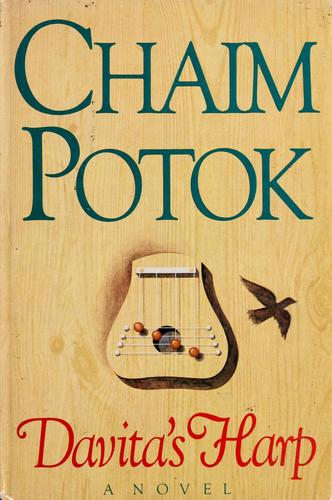
Book Review: DAVITA’S HARP by Chaim Potok


When I was a kid people were either good or bad. The good ones went to church and dressed well and smiled a lot. Bad people wore jeans and didn’t go to church and had tattoos. I was too young to understand the complexity of humanity, my ten-year-old brain hadn’t developed that ability yet. But even through adolescence and into my early twenties, my views regarding the nature of people didn’t change. Not really. Good people were Christians who practiced their faith religiously and in full view of the public. And then there was everyone else, the non-Christians and atheists and Muslims who didn’t get it. (I reserved special distaste for people who claimed to be Christians but insisted on consuming wine and beer and didn’t seem to understand that these were the “Last Days”.)

If you would have asked me why my view was so extreme, I would have told you that believing in God was extreme and that you needed to follow your beliefs with your life. Or something along those lines. Back then, I’d heard of fundamentalism, but didn’t fully understand what it was or what it meant. All I knew was that people were either in or out, either on their way to heaven or to God’s eternal torture. It was simple and neat and easy.

As I’d held that view throughout my childhood years, I was certain that my understanding of people would never change, but when I started to see the lies and abuse fostered through such a simplistic perspective, I began to wonder. Perhaps the world was more complicated than that. Perhaps God was bigger than I’d imagined. Perhaps there weren’t two kinds of people after all…

These are the themes Chaim Potok addresses in his poignant novel DAVITA’S HARP. Set in Brooklyn circa. 1935, the novel tells the story of Illana Davita, a seven-year-old girl born to radical activist parents. Her mother is a non-practicing Jew who long ago gave up her faith after being raised in a strict orthodox home. Her father is an atheist and a journalist, a man who believes that a new era is about to be ushered in with the imminent destruction of Fascism. Both belong to the Communist Party.

Wonderfully told from the translucent lens of a child, the book traces Illana’s early years, her struggle to understand the tragedy both in the world and in her home. She does not understand the desperation of her parents’ activism or the rigidity of the religious people who surround them.

More than just another coming of age story, DAVITA’S HARP explores the dangers of secular and religious fundamentalism and how our inability to see the many colours of the world scar those around us. Published first in 1985, this prescient novel is particularly relevant considering just how polarized our culture has become, both religiously and politically. It seems we are increasingly pushed towards accepting the child-like notion that there are only two sides to every story. Only two answers to every question.

I’ll admit that there are days when the old me still likes this idea. Days when the world seems too complicated. Too hard. But then I’ll read a beautiful tale like the one Potok has crafted here and remember what I’ve seen. Remember how destructive such notions are. And for a while at least, I’ll find the courage to walk more slowly, to think a little more carefully, and love a bit more widely. No longer a child, and better equipped to handle the world’s lament.

****1/2

-Steve

NOTE: The original review from the NY Times is posted here, but be warned that it tells much of the story. Personally, I hate reviewers who insist on giving us a rehash of the entire story. DAVITA'S HARP is not a thriller, but I still don't want to know everything that happens before I read a book. But for those of you who prefer such reviews, it may be helpful.

Thursday, August 12, 2010

Book Review: World Without End by Ken Follett


Sex in the… 14th Century Village?


So, what happened?

If I had the opportunity to interview Ken Follett about this sequel to his runaway, 1989 bestseller, Pillars of the Earth, that's what I'd ask him. I know that over twenty years have elapsed between the two books, and that people change, but I'd want to know when he stopped writing novels and started writing religious propaganda.

I still remember discovering Pillars, sometime in the late nineties, on a paperback table in a local Chapters. A few of my friends had recommended it, and after reading the back cover, I decided to pick it up. I hadn't read any of Follett's thrillers, and this story, about a monk and a mason who want to build a cathedral, seemed weighty and ponderous. I figured I'd have to slug through it.

I'd never been so delighted to be wrong. Pillars was a wonderfully crafted story, populated with characters who, if some became types, were written with warmth and affection. That included the main protagonist, Prior Phillip, the honest monk who longed to serve God but was often thwarted by those self-seekers around him, including several of the monks under his care. And while the book sketched a church rife with corruption, it did so according to the characters, not their ideology. The men and women in Pillars were self-aware, but not otherworldly so, and they fit with the book's 12th Century setting.

So, what happened?

I can't help but ask that question because the disappointment with his follow up is so severe. Pillars of the Earth, in some ways, was a bit of a soap opera, but the melodrama was contained somewhat by the loving care with which Follett described the architecture and the importance it played within town life. Unfortunately, there's no such affection in World Without End. I would say that Follett gets the historical details right, except it doesn't take long to realize that the characters here have been transplanted from a very, very long episode of Sex and the City. The male characters are either cruel or weak, except for the gay monk and any man born with some sort of physical shortcoming. The female characters think and dwell in post-enlightenment, post-feminist, post-modern, post-male, post-digital, post-universal ideas with much confusion and angst. This would make sense, of course, if they HAD been transported back in time. Maybe that's the chapter Follett forgot to write, in which case, the book would make a lot more sense.

The main character, Carrie... errr… Caris, is confused about everything. She's the daughter of one of the town's leading men (one of the few good men in the book, but he also has a deformed leg, so naturally, he's a good guy) and she hates that men can do whatever they want and she cannot. Follett, who clearly thinks that his main character is an excellent feminist who only cares about equality, doesn't realize that he's actually shown what he thinks of feminism by turning her into a petulant, whining brat. Caris also dislikes the church because the monks don't value rational thinking and the only reason the church exists is to keep people down. So, she muses about this quite a lot. She wonders why Reason and logic are not more valued. She never writes these thoughts down, but who knows, perhaps Descartes was thinking about her when he started his own musings on rationalism 150 years later.

Anyway, Caris loves one of the men in the town, Merthin, who's a brilliant engineer but also small and not good looking. (Can you see a pattern here?) He wants to marry her, but she doesn't know what she wants, so she muses more about the fate of women, who seem to have no option but to marry men, all of whom will inevitably lord it over her. All except Merthin, who is quiet and gentle. Still, he's just a stupid man, so Caris bullies him in her moodiness, toys with his emotions, is completely unable to get a grip on her own, and generally treats him like crap. Is this Follett's idea of feminism? Does he realize that he's drawn his proto-female savior as a complete jackass? According to Follett's rendering, she's just a bit confused. That is, what will she do with all this incredible 21st Century self-awareness? Why couldn't we set the time machine ahead just a little?

Between the musings of our central reporter, err, character, we have the battle of good vs. evil, as revealed in the battle between the nunnery and the priory. Women vs. Men. And the winner is… well, the monks, of course. Those jerks have everything handed to them. The convent is prosperous, and the nuns are all kind and caring. The priory is filled with a bunch of shallow, dim-witted men, who can't figure out why they keep losing money. That statement, by the way, is repeated throughout the book. The monks apparently have no idea why they're losing money. (They never do figure it out.) The nuns do even better however, when Caris somehow recalls a book she read from Italy that reveals a new method of book keeping that allow her to keep track of her assets and liabilities on either side of the ledger, which makes it, like, so much easier to figure out if the convent is ahead. Why, she's the greatest accountant since the guy who got Capone on tax fraud! Oh wait, that doesn't happen until 1933, and here, it's only 1333. Never mind. Oh, and did I mention that Caris single handedly saved her father's business by, you guessed it, single handedly discovering a new way to dye wool. It's all so amazing!

Trouble comes however, when Caris ends up being accused of being a witch, and because she has a mole, you know, down there, she's like, totally a witch. And none of those stupid townspeople will listen because they're all scared and a bit slow. (We did do the nose and hat, but she's still a witch!)The prioress saves her though, by offering Caris a place as a nun. She knows that this angry young rebel doesn't actually believe in God, but the girl is such a good leader. So strong! But even she doesn't know that Caris is not just going to be any nun, but THE GREATEST NUN THE WORLD HAS EVER SEEN.

The novel skips ahead a decade, and Caris is now one of the leaders in the convent. No, she doesn't have faith and has no use for God, but she's actually more warm and caring than the rest of the nuns (probably because she knows how stupid the whole God thing is), and the whole town knows it, too! Also, she's super smart, (did I mention what a good leader she is) and it is she who discovers that the prior has stolen the nuns' money to build himself a palace. He refuses to give it back. This is an outrage, of course, so Caris sets off to find the bishop, who is travelling with King Henry III as the English army sweeps across France. No problem. She'll get that money back no matter what.

So she sets out from the convent, and boy, she is really mad. Accompanying her is a beautiful younger nun, Mair, who's also a lesbian and in love with her. They do experience some difficulty when the two of them, alone, cross into France, and discover that the English army has raped and burned the French villages along the coast. Another big problem is that the sexual tension between the two nuns is pretty high, because the two girls have had sex, but Mair really, really loves Caris and Caris still thinks a lot about Merthin, although he's moved to Italy and she's still not sure whether or not she wants to marry him. Merthin is so unfair. Why can't they just keep having sex like they did before? Anyway, that makes it really hard on Mair, who really, really loves her and is so hot. So between the sexual tension and relational difficulties, along with the burned out villages and two massive armies trying to destroy one another, Caris realizes they need a disguise. The two of them dress like men, and manage to fool both the French and the English armies, even though they first must spend a full week on the battlefield helping the French surgeon dress wounds. When she finally gets to confront the king, she is very, very frustrated with him because he just won't listen to her. Typical man! The soldiers however, are gossiping about these amazing nuns, who have somehow travelled across two countries and two armies at war without a scratch, and have also managed to heal their relational difficulties. Thank goodness Caris is so clever!

Meanwhile, back in Kingsbridge, the man she loves, Merthin, continues to startle and amaze the townspeople with his nifty inventions, but hhe has been unable to convince the town to let him use his genius again to help rebuild the church tower. The townspeople, you see, are mostly stupid. (Those 14th Century morons.) Especially the men. So even though Merthin's ideas have literally saved the town from destruction, twice, no one supports him. (Did I mention that Merthin is small and not very good looking?) Thankfully, Caris gets back not a moment too soon, and she shows him what he needs to do to win the town over. There are more obstacles, but Caris overcomes them all. She resigns from the convent, appoints her successor, also manages to appoint the bishop and the prior, and finally decides to marry Merthin, as they become partners as the town's two most influential people. Did I mention that through a large swath of the novel Caris helps the town overcome the plague and is appointed not only as the head of the convent, but the head of the priory as well?

So, Mr. Follett, I know that I'm repeating myself, but what the hell happened?

About fifty pages into this book I started getting angry, but I kept reading in the hopes that I would find the same writer who'd once written one of my favourite novels. When it didn't happen, I kept reading because I knew that I would review it, and I wanted to spare people the fourteen bucks and hours of time reading this narrow minded schlock. The characters in the novel are not actually people, they're excuses for promoting Follett's agenda. Never mind that they have no nuance to them, what really offends is this idea that people are either good or bad. In Follett's case, bad people are those who believe in God, good people choose reason instead of God and treat people in the church as either weak minded or devious. Follett's ideas about feminism are as offensive as those of a fundamentalist, in that while it seems like he's favouring his female characters, what he's really doing is showing you just how silly women are, in his opinion, when they get power.

I'm sorry, but if you haven't figured out that people are not simple, and that religion and gender and sexuality has nothing to do with whether or not a person exhibits admirable qualities, then it's time to stop writing. Or at least, label your work like they do for Muslim fiction and Christian fiction. Just let us know that you're working through an agenda. Or write the chapter with time machine and how Caris was really an assistant on Sex and the City, and wanted to be like Carrie except that she wasn't funny and had no apparent flaws.

In Diana Gabaldon's review of this book for the Washington Post, she called it a morality play. That's one author showing kindness to another. World Without End treats both its characters and readers as idiots, and produces the same smugness Caris exhibits towards the people in her village. If that's what it means to be non-religious, I think I'd suddenly want to go to church. The irony is that Pillars of the Earth was written as a result of Follett's love for cathedrals, with the understanding that such cathedrals were not only a place to inspire majesty and grace, but to unite towns and villages behind a single idea, the acceptance of their own humanity. Twenty years have gone by, and Follett no longer has any use for humanistic ideals about the great possibilities that lie within people or the difference we can make in the world around us. His title reflects as much, and after you finish reading it, you realize that World Without End is not a statement of hope, but the conjoined misery of a rich, old man, who looks around and realizes that no matter what we try to do to make things better, things will never really change, and the world will keep on spinning out its misery.

Zero stars (out of five)


Copyright Stephen Burns 2010