The laptop bag weighed heavily on my shoulder, the consequence of once again refusing to leave anything in the car, so it was with some relief I spotted the two empty tables. Finding a spot at this particular Chapters/Starbucks was usually a hopeless endeavor, and even if you waited, there was no ‘official’ lineup. If you sensed movement you rushed towards it. And if the person was actually leaving, you made sure that your bag was down and your things were on the table as quickly as possible. Today however, there was no need to rush, and I put my head down as I walked over. Another woman had seen the open tables as well, and she bustled past me, nearly clubbing me with the huge, reusable shopping bag slung over her shoulder. I barely noticed though, as I was just happy to find a seat. I grabbed a chair from the table on the right, and though she’d laid her things down at the other table, she made a noise as if she objected to my sitting down. Well, whatever, I thought. I dropped my bag beside my chair, ever amazed at my own ridiculousness in packing so much. Did I really need two novels in there? What was the second one for, anyway? I’d already forgotten about the woman when she stood up and looked at me.
“It’s a good thing I sat at the table first.” The woman said.
At first I thought I’d misheard her. Was she talking to me? And what did she mean, exactly?
She was in her early thirties, tall, and very thick. She wore tight pants and an overlapping sweater into which her extra weight had been crammed and tucked so tightly that she looked as if someone had stuffed two cushions into a single pillow case. A very expensive pillow case. Her purse was probably worth more than my entire wardrobe. Her face had large features and included a full second chin that hung low but was kept in place by her jaw, which jutted out and up as she looked down at the people around her. It was hard to make out the rest of her features, framed as they were by an overwhelming trilogy of curls, makeup and perfume.
She strode over to the counter to order her drink, teetering on her knee high boots lacquered against her calves like black sheaves of armour. A few minutes later she came back and sighed heavily as she looked down at me.
“Can you please move your bag? It’s hard to get around here when you just put your bag anywhere.”
I moved the bag to the other chair at my table.
“All you have to do is ask.” I said. “We don’t need to hear your commentary about it.”
She harrumphed and sat beside me, wiggling around in her chair as if willing the wood to soften. I sighed and tried to keep my face neutral even as her perfume threatened to engulf me. I’d always hated people like her, people who stomped around looking down their noses at others and making sure everyone knew that the world revolved around them.
I turned the pages of my magazine, working hard to focus on what I was reading, but the woman soon started a conversation with an older man at the table next to her. Their conversation drifted from phones to him asking her occupation.
“I’m an accountant.” She said. “I run my own business.”
“Oh, that’s very nice.” The man said, his accent thick. It sounded like he was from somewhere in the Middle East, but I wasn’t be sure.
“I’m also a model. I’ve been modeling since I was eight.”
“Oh, wow.”
“Yes. My husband is always surprised how I can just switch things on and off. I walk into my business and I become this whole other person, like I’m totally in charge. And yet, I’m very carefree, which helps me when I’m modeling. He asks me how I do it, and I tell him I’ve been doing it since I was eight, so it’s like, no big deal.”
I felt something shift then, and I slowly packed up my bag as the woman continued to tell the kind old man about her modeling exploits. The anger seeped out of me as I listened to her, gradually replaced by a growing sadness. Moments earlier, I’d felt my anger peak. I’d been confronted by a wealthy, aggressive snob, who clearly thought the world should bend their knee to her. Now, I saw an awkward, lonely person struggling with her self-esteem.
I looked back only once as I left. She was squished in over the table on the smaller chair, bent over her phone as if waiting for it to ring.
For the rest of the day I went over in the incident in my head. She’d done nothing to alter my original impression, so why had I suddenly been confronted with a vision of a completely different person?
It was something I’d been thinking about for a while, and after a few days I realized what had happened. I felt like I’d been given a nudge to one of the great mysteries, and difficulties, of life. A way to help me deal with the ever vexing nature of greed and selfishness so prevalent in humanity, which I noticed was especially characteristic of the guy in the mirror. Some religions had a whole set of rules and regulations regarding what I’d learned, but for me it was much simpler than that. For me, it was doing the impossible.
***
Contrary to popular belief, the greatest battles in humanity are not fought over land or politics or religion. While we offer these reasons as to how and why people can do such horrible things to one another, the truth is somewhat more complicated, and simple, than we want to believe. Within the three pounds of tissue that hang loosely within our skulls, warfare of the kind we are only beginning to understand is waged on a daily basis. Billions of neurons sift through a constant sortie of signals through synaptic connections, communicating through long protosplasmic fibers called axons. These axons develop synaptic connections that grow and strengthen with repeat usage, and weaken upon disuse. The tendency is for the pathways to continue to strengthen, and as such, our responses become more typical as we age and develop routines. These routines include not only physical activities (think about how you always dry yourself in the same manner when you get out of the shower, for example) but our psychological tendencies as well, the way we think about the world and the narrative we draw from our experiences.
However, the battle within our brains is fierce, as every new signal competes for the attention of others. The decisions we end up making are never ‘unanimous’, no matter how simple a decision may seem to be. (e.g. I’m hungry. I’m going to eat an apple.) In that environment, every decision, every signal, is a fight for control. Every factor is considered, whether it’s our past, our experience, what we’ve learned or haven’t learned or even think we’ve learned.
The point is that people are not a single entity, not in the way we normally think of it. We are a hive of activity and conflict, of ideas and actions and thoughts that make little or no collective sense. Haven’t you ever wondered why a person can say something to you on certain days and it isn’t a big deal, when at another time it would be something you considered hurtful? Or why perfectly sane people contemplate horrendous acts for small or merely perceived slights? We can offer a variety of reasons about why and how people constrain themselves, but the point is that this perception that a person is a singular unit is not only incomplete, but inevitably becomes dangerous and divisive. If I associate one person with one event or one idea or one concept or one behaviour, then inevitably I am forced to choose whether I agree with them or not. If I don’t agree with them, then that makes them my opponent, or depending on what circles you travel in, your enemy.
And if I don’t understand that people are not one thing, but many things, then I will never understand who I am, and I will never be capable of achieving humanity’s most difficult assignment. I will never be capable of doing the impossible.
***
The young man had walked for three days and three nights, and he was tired and hungry. He was wealthy enough to hire a caravan, but someone had told him that it was impossible to walk for three days and three nights without sleep, and so he’d set out to prove him wrong. His whole life had been like that, a life devoted to doing the impossible. He’d been the best student in his school and the best athlete. When he’d moved into business for himself, he became the richest man in the city. Women thought he was the most desirable man in the city, and men fought for his friendship. Everyone wanted to work for him because he was regarded as the best employer, and his kindness was on the lips of the poor and rich alike. He travelled the world and met with kings and queens, and everyone told him that what he had accomplished was impossible. Despite his success, the young man tried to be humble. Not impossible, he would always say, just difficult.
Yet he was restless and did not know why. Everyone had told him that he had nothing left to accomplish, but even after an admittedly young life filled with success, he was ready for a new challenge. He’d heard about a woman, some called her a Prophetess, who lived in a small village on the edge of the desert. They told him that there was no question she could not answer, and that her wisdom seemed to come from God Himself. She would help him, he thought. Perhaps she would set a new challenge for him.
It was morning, and the sun was already hot. He stopped at a rickety looking stand and bought a meat pastry. He asked the vendor where he could find the wise woman.
“Oh, you mean Annabelle.” The man, who was as thin as a stick and darkened from the sun, chuckled. “I hope that you have a good question for her. She gets annoyed with people from the city who don’t have a good question.”
The young man thanked the vendor, and after getting directions how to find her, headed down the road. He wondered what question he should ask her. He certainly didn’t want to waste the time of such a famous woman.
The directions led him to a small farm house. A herd of cows mingled with horses in the nearby field, and the door had pieces of paint peeling from it. What wise woman lived in a place like this? He knocked anyway, and was again surprised when a man answered the door carrying a young boy on his shoulder.
“Um, good morning.” The young man said. “I’m looking for Annabelle, the wise woman.”
The man rolled his eyes good naturedly and twisted his son around his back.
“From the city, eh? Well, wait there. I’ll get her.”
The young man was sure it was some kind of a trick and that this couldn’t be the right place, but he couldn’t leave now without being rude. And he was never rude.
The woman appeared in the doorway and led him out into the yard. She was tall and middle aged, with kind eyes and thick black hair. She folded her arms and smiled patiently when he introduced himself.
“You city folks are funny, you know that. Okay, you can ask one question. If it doesn’t annoy me, I’ll answer one more. Understand that I don’t like the rules, but I’d never see my family or get any work done if I stood around answering questions all day.”
The young man nodded respectfully.
“My whole life I have done what people said is impossible.” He said. “I have accomplished everything there is to accomplish, achieved every goal I’ve ever set. What, in your opinion, is the one thing that is absolutely impossible to accomplish, the one thing that no person has ever done?”
The woman looked at him, but didn’t answer right away. The kindness in her expression was so prevalent that it nearly masked the stark intelligence behind it.
“Where are your parents?” She said softly.
The young man gritted his teeth.
“They have been dead a long time. Two men robbed us when we were young, and when my parents tried to stop them, they were killed.”
“And what happened to the two men?” The woman asked.
“When I was old enough I went after them and saw to it that they were locked away for the rest of their lives.” He said proudly.
It was the first thing he’d done that people had said was impossible. He was too young to pursue such evil men, too inexperienced. He’d proven them wrong, as he’d always proved people wrong.
“Are they still in prison?” She asked.
Her voice was low and soft, but there was something within it that seemed to give it more weight, though he didn’t know what it was. Still, the young man was troubled by her questions. What did those men have to do with accomplishing the impossible?
“Of course. They will rot there for the rest of their lives.”
“Then your task is to get a judge to release those men into your custody. You are to look after them for the rest of their lives, provide them with a home, and care for them.”
The young man exploded.
“Do you know who I am?” he said, shaking a fist at the woman. “I have led whole armies into battle, traveled the world three times over, sat down with kings and queens. I have built hospitals and churches and shelters for the poor. After all that I have accomplished, you dare to ask me to care for my parents’ murderers?”
The kindness in the woman’s eyes had not gone away, if anything, it shone even brighter, though it was now tinged with sadness. This caused the young man’s stomach to churn and his eyes to well up.
“Do this, and you will have truly accomplished the world’s greatest feat.” The woman said.
The young man paused.
“I-I can’t. What you ask is impossible!”
“No. It is not impossible.” She said. “Just difficult.”
The young man shook his head and walked away. Love his parents’ murderers? It seemed he had found the wrong woman after all. He went back to the city, and for the rest of his life continued to accomplish things that people said were impossible.
***
When people talk about doing great things or achieving the impossible, it’s rarely framed in terms of relationships. Most of the time we’re talking about things that will bring public acknowledgment. Things like writing a best seller or becoming famous or making a fortune. And while these accomplishments are great things, they are not the greatest thing.
No, the greatest test for humanity was laid out two thousand years ago, as a Jewish Rabbi sat around a small fire with his students, young men who had grown up in an occupied country and seen their people slaughtered and harassed for centuries. When they asked him how they could be great, he told them something they had never heard before. He told them they needed to love their enemies. Anyone could love a friend, he said. Swindlers and tax collectors did that. Later, he would go on to tell them that they were to do two things in their life. To love God with all their hearts, and to love their neighbor as they loved themselves. And, as he would clearly point out in his next teaching, your neighbor was not the one living next to you, your neighbor was your enemy. His teachings made his students uncomfortable, and when he spoke to larger crowds later that same year, they too, were discomfited by his words.
Two thousand years have passed since this small town Rabbi stood along the shores of the Sea of Galilee and shared his wisdom. Many have claimed to follow him since, finding in his words and life both hope and peace. It is his greatest and most difficult teaching however, that we have most often chosen to ignore. A teaching we acknowledge but nearly always decide should not be taken literally. Surely he was speaking metaphorically, wasn’t he? And so instead of lifetime spent wrestling with the world’s most impossible test, we have added on to the Rabbi’s simple words by writing our own books and setting our own goals. We pick and poke at one another. We publish whole volumes on what separates us from the crowd, including certain groups within the crowd who also follow the Rabbi. We scream and dance and cajole and convince until we are exhausted, certain that if we just make enough noise, that we’ll make a difference or feel better about ourselves or that God will hear us and be pleased.
And so the world moves on, centuries pass, and more than ever we continue to fight and kill and criticize and attack. We couch our control of others in religious language. We use churches devoted to this Rabbi as battering rams for our ideas. We learn how to sound holy and unique and listen for people telling us about the great things we’ve accomplished, and yet when we look in the mirror, when the world gets quiet, the unrest rises and we wonder if perhaps there must be a greater task, perhaps something wonderful and impossible, that God has set for us.
***
A foggy gloom has descended over the city, and as I stand on our balcony, I can’t help but think how often I fail miserably at loving others, let alone my enemies. How often I cut people off or cut them up, how often I get into arguments or discussions that produce nothing but more angst and more despair, and how often I justify my actions by telling myself that I am on the right side or that I am right. It seems as though my desire is for others to do what I refuse to even attempt to do myself. More than anything though, I want people to be good… good like me. Except I’m not good. Not always. Sometimes I’m a jerk. Sometimes I say and think horrible things. But that isn’t all of me, even when I act like an ass. It isn’t “me”. It’s only part of me. If it was all there was to who I am, it would make sense for some people in this world to hate me, but I also know that I’m capable of good things, too.
It is impossible to love an idea you hate.
It is impossible to love a behavior you find detestable.
People however, are not one idea or one behavior. What’s true of me is true of everyone else. The woman in Starbucks may have been acting like a snob, but she was also lonely. She may have been rude, but she was also friendly with the old man. Our brains naturally label and generalize to help us sort through the constant stream of information, but too often we get caught up in labeling people. Conservative. Liberal. Atheist. Christian. Snob. Elitist. I know I do. But there’s no way we can even attempt to love others, let alone our enemies, if we don’t see in others what we recognize in ourselves, if we don’t understand that we are all an illogical collection of paradoxes and contradictions, of darkness and light, of good and evil.
Unlike our other dreams however, there’s no payout when it comes to doing the impossible. No financial rewards. No fame. People will not recognize you on the street. But my prayer this week is that you’ll see the other benefits that come from attempting God’s greatest test, that you’ll know a life of love and caring beyond what you’d ever hoped for, and that one day you’ll realize that you did, in fact, change the world. And when people around you, including your religious leaders, excuse you from this task by offering a new volume of reasons for its dismissal and exactly why it’s impossible, you’ll know what to say.
“It’s not impossible, just difficult.”
-Steve
Authour's Note: Loving your enemy, both as a concept and practically, never means staying in abusive situations, be it verbal or physical. Toxic environments are to be avoided because our ability to love others is always weighed against our ability to love and care for ourselves. The problem of domestic abuse in the church (as in societyt) is a long one, but in the church it is particularly disgraceful when some preacher's use that which we consider to be sacred (the Bible) as a tool for power and control. (I'm talking to you, John Piper and Mark Driscoll) the Bible was never intended as a weapon to keep people in line. It is the story of a God and His people. To willfully submit to abuse is not to love someone. It is, in fact, quite the opposite as it enables anger and hatred. We need to stop enabling abusers and confront them with the truth of their hurtfulness. That is love.
That the church so often covers up domestic abuse is one of its most disgusting and not-so-secret secrets. If you are in an abusive relationship, please take the necessary steps to get out, and do not let a pastor or preacher (like Piper) convince you that you do not have a right to a safe life. No matter how much they twist Scripture, understand God wants you to be in a position to love people, and when we hate ourselves, the result of such abuse, we cannot love others or experience God's love as he intends for us.

Showing posts with label Jesus. Show all posts
Showing posts with label Jesus. Show all posts
Thursday, March 17, 2011


Tuesday, September 07, 2010
Why Faith Matters... or Does It?

Walking Away from God...
The details seem a bit fuzzy these days, but I can tell you what started my walk away from Christianity. Or I suppose I should say, what finished it.
I was nineteen years old, and from the moment I walked through the doors of Faith Tabernacle, the mid-sized Pentecostal church just minutes away from my childhood home, I sensed something bigger than myself at work. People moving towards a place with which I wasn't wholly familiar, a place that looked and felt like hope. It was celebratory and expectant, and I got caught up in the euphoria of it all, lapping it up like a thirsty traveller who'd been on the road for a long time. I determined that I would never go thirsty again, and so I consumed it all. Books. Videos. Services. Music. Anything about this new movement—this new life – that I could get my hands on. The world made promises about peace and happiness and contentment, we were told, but it never delivered.
God always delivered.
Trust him.
Trust us.
Join us.
And I did.
For a while, there was nothing to not like about being this kind of Christian. It was a community of happiness, like a love commune from the sixties but without the drugs or sex or instability. It reminded me of my trip to Cuba a couple of years earlier, my first time experiencing the brilliant white sands of Varadero beach. Looking out from the shore, the water's clear translucence a colour and clarity that could never be coaxed from human undertaking, and like a siren it called with such a whispered grace of its gentle swells that I found myself unable to move at first, until finally I waded in, my feet digging into the silky sand bottom. I'd never been to such a beautiful beach, and the promise of those waters was something to be savoured, as sure a promise of perfection that I would ever experience. Such was the experience of my first few years in church. It too, held great beauty and promise.
Once I had waded out far enough however, the church was no longer beautiful or innocent. It was dark and deep and foreboding, and what looked like little fish from the shore were actually much bigger and far more terrifying, and they circled about the others, waiting to bite and sting. I shouldn't have been surprised, but I was, probably because I believed the illusion. I didn't understand so-called Christian leaders using their influence to enrich themselves. The pettiness in people who had been Christians for twenty or thirty years. People using prayer as a tool for gossip. The disregard for women and minorities. The sense of us against them, that we were all so different from those outside the church. My steps became more cautious. Protecting my reputation became important. No sudden movements that would allow the predators a chance to attack. Before, the water had looked inviting. Now, it was the beach that I longed for again, longed for the time when I'd merely wished for a place of hope and believed that such a place existed. I couldn't help but wonder that if Jesus, if he had ever existed, no longer lived here. It took a few years, but eventually I waded back to shore. Back to the beach, where the water looked as unrelentingly graceful as ever, the gentle waves rolling onto the shore. Only this time I knew better, and no matter how the sand burned my feet now, no matter how the smells or sounds of the waters called to me, I wasn't going back in. I'd learned my lesson well enough the first time.
***
Faith is not easy. I say that because there seem to be a great mass of people who feel that it is. Perhaps it's just the ones with the biggest mouths and highest amount of insecurity, but their voice is still loud and repeated by Christians as if it's a mantra. When I first waded into the waters as a pastor, I would have agreed with them. Jesus is the Son of God. Just believe and things will work out. Okay, let's get to work. It was in the work however – the doing of church, the praying, the morality, the schedule, the interpretations – that it stopped being easy. There was a dichotomy between the concept of faith and the application which I did not understand. At first, I merely blundered down the path believing God would sort it out. That's what faith was, wasn't it? And then I saw how destructive the results could be. How simply "believing" could ruin people's lives with its unintentional consequences, especially when the more selfish individuals used the naivete of some to do what they wanted. After that, the only thing left was to turn to the structures. The rituals. To be conscious and completely rational about every application. To leave nothing to chance or wind. It helped, but it also cut me off from the idea and sense of God's presence. To be a Christian, it seemed, forced one into a decision. Either the spontaneity of a relationship with God, or the careful applications of well thought out morality and religion. Both held consequences, and neither was perfect, but it was all we had.
Through the years, I lived both in sequence. First the spontaneity, and then the careful, religious application.
And then I stopped.
Neither felt right or complete, and I couldn't hear God's voice any more. And for me, it had always been the Voice, the whispers in my heart that despite all, the world was loved, people mattered, and that God had not forgotten us.
When the Voice disappeared, I lost my way, no longer called myself a Christian. Suddenly the world was a very different place. I wasn't sure that I liked it much, but I was out of options, and I'd long since given up the idea of lying to myself. That I eventually returned surprised no one, I think, but it shocked the hell out of me. A few years have passed, and I still find it hard to believe sometimes that I am not only okay with the idea of church, but that I still hold great hopes for her.
***
If you were to ask me what it meant to be a Christian fifteen years ago, my answer would have been automatic. These days, I'm less sure. My faith, such as it is, mostly feels like an echo. As if I have wandered into a large canyon and the voices I hear are not from the heavens, but the reverberations of lives and truths over the centuries around a single Event. I am both heartened and dismayed when I read that the early church made a number of mistakes. I am heartened because they remind me of me, with their misunderstanding and unloving applications of what Jesus said, and I am dismayed because it all feels so impossible. If they couldn't get it right, how can we?
There are a large number of Christians, of course, who will tell you that the early church never made a mistake. That they followed "The Way" perfectly, and that we can too. There's no proof for it, merely the insistence that Scripture is infallible and inerrant and inconceivably and irretrievably absolute. If you dig enough, they'll tell you that it comes down to faith.
Hey, everything comes down to faith. It takes faith to believe in evolution. It takes faith to believe that tomorrow will be a good day. It takes faith to believe that no one will cross the little yellow line in the middle of the road, especially when you're driving a compact and everyone else is driving an SUV. For people like me, the literalist idea of faith is a bit like eating your grandmother's cooking. You remember how good it is until you try to eat it, and realize that it's indigestible pap.
What you won't hear in most sermons is that being a Christian is as much about mystery today as it was two thousand years ago. Or that following Jesus, a crucified Roman criminal, makes about as much sense now as it did then. And the reasons to NOT proclaim Yeshua as the Messiah are just as arresting now as they were then. How do we know Jesus rose from the dead? The story of the twelve disciples has been told in other traditions, what makes this one special? Was he really born of a virgin… or was it a young woman, as the translation indicates? Weren't a lot of his teachings taken from other Jewish rabbis?
The answers to all of those questions are simple enough, aren't they? And without faith, becoming a Christian is a pretty stupid idea. Unfortunately, the literalists/fundamentalists acknowledge this part of it, and believe that somehow being stupid and having faith are the same thing. That's why Christian writers insist on defending their faith as if it's a scientific argument. And why scientists (fundamentalists of a different 'ilk) insist on defending their studies as if their making a theological argument. What separates them is the mystery, and the human tendency to avoid it at all costs. To know is better than to not know. In the case of faith however, we don't know, and we never will. But instead of simply acknowledging our human limitations, we produce books and writings and music and videos to both remind and teach us that faith can be remembered… if only we could remember it more often. The question then, if faith is so important, is why do we keep forgetting?
***
When I was a young pastor, I always worried when I felt like God got away from me. I wondered how I could be a Christian if I wasn't reminded of his presence on a daily basis. I was taught that the "world" hated God, that it was a natural thing, and that I had to fight to keep my faith. It was part of the reason we were encouraged to go to church three or four times a week. In a "godless world", it was necessary to remember why we were here and what God had called us to do. When I read my diary from twenty years ago, I can sense the daily panic when all is suddenly not as it should be, when God seems distant and I suddenly feel merely human. A good deal of my pastoral counseling was aimed towards getting people, both young and old, to getting that "good feeling" back again. In many ways, my idea of faith mirrored our culture's pursuit of happiness. A frantic sort of passion channeled into energetic vows of eternal longing. The culture of godliness and the culture of the "world" might have been opposing forces, but thank God they traveled at the same breakneck speed.
***
I still listen for the Voice. Still long to hear the quiet whispers of something Other to interrupt my daily musings, or remind me that the world is more than my own needs and wants. That the world is more than another commercial or YouTube video waiting to go viral. It seems to be getting tougher to hear these days, and while I'd like to blame it on culture, the truth is that faith is hard, and most of the time it sucks. It asks much, and for long stretches seems to deliver so little in return. It asks me to take risks, asks that I don't shut down when strangers and strange people that I don't like ask me questions. It asks that I accept people I would never hang out with, and worse, asks that I accept my own failings and humanity. But as tough as those things are, the most difficult thing it asks is the acknowledgement of my own humanity, my sameness, on a regular basis. For all that it reassures me that I am loved, it reminds me that I am loved only as much as my loud neighbours next door and the criminals in prison and the gay couple across the street. That God's love is infinite matters little, because most days I want more; I want to be special. What I really want, more than anything, is to be greater.
And that's why I'm a Christian. Because more than any other religion or doctrine or creed, what it means to follow Jesus is to be less than those around me. It contradicts all that we strive for naturally as humans, and the wrestling with it, however much we try to help it by our enforced commoditizing (Jesus bracelets, nic nacs, videos, etc…), never ends.
Surety is fool's gold, especially when it comes to God. Religions try to sell it because the very nature of their humanity almost demands it. They think that you and I are too stupid to know the difference, or that you've never been to a bad sale before, where the actual price was much different than the one advertised. It is however, what faith demands. Faith demands that we never truly know. It tells us that we will never be God, no matter how many charts and books and videos we can produce to prove our theories. Faith stands the test of time because, like time, it is always present and doesn't change to suit our needs. If God was anything less, I would question His existence, the way I question the empty arguments seeking to prove that there is no Creator. But the essence of life is not in what we know, but what we don't understand, and it's something for which the cure is neither willful ignorance nor a Harvard doctorate. The cure, strangely enough, is merely to ask. To ponder. To question. It isn't easy and it is never simple, but the power of faith is one that echoes through the centuries, and if we listen closely, can be heard in our own lives, if only we are willing.
-Steve
Saturday, August 07, 2010
A Birthday Wish
A friend told me this encouraging story recently, about one of her cousins. He was in his mid-fifties and had been diagnosed with prostate cancer and given one year to live. He spent the year getting things ready and preparing his estate for his wife and kids, when he was informed by the doctor he had six weeks to live. He and his wife did some research, and he was offered an opportunity to try some experimental techniques in Washington. The doctors told him he had a fifty per cent chance of surviving the efforts. Amazingly, he survived the experiments. Not only did he survive, but two weeks ago received word that the cancer was completely gone. After living with the prospect of death for over a year, he had his life back.
After she told me, I couldn't stop thinking about this man, about what life would surely mean for him now that the immediate prospect of death was removed. Every day, I thought, would be a tremendous gift. We hear stories like this, and while they happen to be true, we scoff at the sappy conclusions when someone reminds us that we live under the shadow of death every day, that each one could be our last, and that all we have is a gift. And yet, it's true, isn't it? I think we resent the sentimentality of it because sometimes the people who do the reminding are so busy being happy, they make everyone around them a bit depressed. But that doesn't mean that the idea is wrong.
I think about that quite often these days, more as I get older, and especially on days like today, which happens to be my birthday. (I'm turning 23 for the 15th time.) I like getting older, frankly. I like that I have a better feel for who I am and what the world is like. I also like that it's okay to not party all weekend (so exhausting) and that no one thinks anything of it that I like to nap, errr, now and again. It strikes me how easily we forget the important things though, even now. That a life without relationships, without love, is no life at all.
I received a note from a friend of mine today that brought tears to my eyes. She was so kind and so encouraging, her note left me speechless. But it was the kind of thing she always does for others, and so consistent with her character. My life would be considerably less without her friendship. But then, that was true of so many people in my life. If you would have told me four years ago or eight years ago that I would be happily married to a beautiful and brilliant woman, that I would have a number of wonderful friends who accept me for who I am, and that I would live a life where getting out of bed in the morning at 5am is a joy, I would have called you crazy. (Especially the 5am part.) That doesn't mean I am without struggles or issues, as I've documented so often on this site. But the older I get, the more treasures I see in the people around me, and for that, I am extremely grateful.
So my birthday wish then, for all of you, is to know this more deeply. To know that tomorrow is the treasure we build up today. To know that your relationships are the brick and mortar of your life, and what you do with them will determine how you live. And finally, I'd be remiss if I did not mention my deep and abiding love of God, a love that has been nurtured by many people over the past thirty years. As I've gotten older, I've become less sure about the details of my faith, the ones that seem draw so many people into arguments, when by all accounts, we should be doing the much harder work in mimicking the love God has for us.
I first started hearing about this Jewish Rabbi when I was very young. He seemed so wise. So loving. Well, that's how everyone described him at least. That was what you found in the stories, those I was confused by some of the people who said they knew this Rabbi.
These days, it can be hard to distinguish between those who follow Jesus, those who think they're Jesus and those who think only they can speak for Jesus. It's frustrating, and I completely understand why so many of my friends give religion a wide berth. But without God, my life is an empty shell. I have known him since I was a small boy. I know how that sounds, and hey, I understand if people are skeptical, especially if someone has used religion to clobber you and hurt you. But it doesn't mean that I can deny the role God has played in my life. He has given me so many blessings, but more than that, his persistent love pushes me towards people when I don't feel like loving, and pushes me towards a mirror when I need to rethink some things, and when I'm alone, he's there with me. And that, I think, is the greatest thing of all about getting older. The older I get, the less I know. The less I know, the more I see. And the more I see, the more I realize that to exist without the presence of God would be the greatest loss of them all.
-Steve
NOTE: Why not send an encouraging note to someone today. Perhaps an old friend or family member you haven't talked to in a while. Trust me, you won't regret it.
Friday, August 06, 2010
Violence Makes us Feel Better
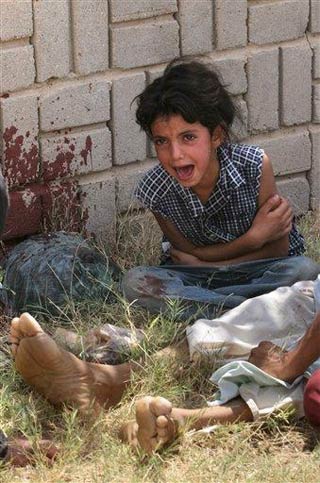
I didn't think much of it when I stepped out onto the balcony and noticed the swarm of police cars camped out below. I'd often joked about how 911 was really unnecessary at our building because the police were usually already there. But as I looked down from my eighth floor view, I noticed entire families watching from their balconies as well. Okay, so that was new. So were the two helicopters. My stomach clenched, and decided to head downstairs. A tall, hook nosed officer at the door politely told the small group of us that no one was allowed to come or go. I waited by the elevator, willing it to come quickly. Back in my apartment, I headed out to the balcony and noticed the police tape for the first time. They'd marked off a small section of trees to the right of the front entrance. And there were more police cars. So many I lost count.
Bethany.
It was my first thought. My wife had left a couple of hours earlier to head for work, and I'd drifted off for a short nap before working out. I checked my cell phone. Breathed a sigh of relief at her text message. She was outside the city. I checked online to find out more. Apparently a woman had been thrown off a balcony on the 11th floor. The story talked about a "massage" parlour being run out of our building, her screaming, and the police kicking down the door but unable to prevent her from being thrown off the balcony.
I called my wife. Twittered. Exchanged messages. Everything heightened. Everything alive. I felt sadness, felt the barbarity of the act, but more than anything, I simply felt. What I didn't like however, was the suddenly heightened sense of importance I felt at being so near a tragedy. It was wrong, but I was too close to look at it, too close to understand what was happening. Even now, a few days later, I wish for greater sadness. Because the truth is that the most dominant feeling I experienced once I knew that my wife was safe, was excitement. Not the excitement you feel when you accomplish something or watch your team win a championship or share something with family or friends. No, it was something much darker than that.
***
Scientists have some evidence that extremely violent behavior is a result of reduced platelet serotonin levels in our brain, and that it is a dissociative disorder arising from a lack of maternal bonding and affection. What it hasn't explained is why all humans still tend towards violence. If we exempt those struggling from emotional dysfunction, (a relatively high number in our society) the better answer for the general populace when looking at violent behavior is the basic psychology behind it.
Violence makes us feel better because it raises our status, and it does so in two ways. The first is association. Being associated with violence, even as a bystander, in a liberal democratic society, immediately enhances our status, because for many of us, our daily survival is never in question. Western society has done a better job protecting its people from violence than any other in the history of civilization. We live longer than ever, and our child mortality rate is absurdly low. We may not like all that progress has brought with it, but we live in a far safer society than that of our ancestors. Violence has a darkness to it that is powerful and entrancing, and its allure is even greater when we don't have to worry about it actually affecting us. Think of the Iraq war, with hundreds of thousands of civilian Iraqi deaths, encouraged by many pundits while we simply cheered our soldiers, with no risk to ourselves, and only vague political mush to excuse our excitement over what was, and still is, happening there. When we associate with violence, we become the Roman mob, cheering the spectacle of blood at the Forum, quickened by the darkness that violence brings. It creates not only a heightened sense of awareness in our brain, but serves as a means to delineate the daily routine with an event of significance. And if the event is significant, so are we.
Violence also makes us feel better by doing. That is, we commit acts of violence against one another to preserve our status and enhance our own sense of power. That may not manifest itself in something as barbaric as throwing someone off a building, because the violence Western culture suffers is often more hidden and more subtle. Take for example, supposedly Christian forums where one believer will rip apart someone who doesn't agree with them about a minute point of Scripture. Or how whites trash blacks and heterosexuals tear apart the gay community. People wonder at the vitriol on the internet now, and argue that people would never say these things if they weren't anonymous. But that's not true. It's a different forum, to be sure, but I still remember my grandfather talking about "n******" and other races as if they were inferior. Every day I see acts of violence commited against women in both words and posturing, violence that doesn't always manifest itself physically, but does so behind closed doors more than we imagine.
And the more I read, the more I am convinced that Christopher Hitchens and Richard Dawkins do not know what they're talking about. Dawkins, in particular, has made a career out of pontificating that religion is the world's great evil. That most of the violence done throughout history was done in the name of religion. He's right, of course, excepting the Soviet experiment in the 20th Century, which was responsible for the death of about sixty million people. But doing something or committing an act in the name of religion has nothing to do with religion itself. If that were true, then atheists would be the most peaceful people on earth, and the only group who can legitimately make that claim would be the Tibetan monks.
There is a difference between verbally ripping someone to shreds and physically killing someone, but how much? What is the difference between a young person who was so emotionally abused that they will spend most of their life trying to heal, and the young person who was shot in the leg?
Whether we like it or not, the presence of violence, or even the threat of it, gives us status. This is a highly tuned evolutionary premonition, and in the eyes of many Christians, it is the prevalence of our sinful nature. And yet, it abounds. Is there anything more absurd than listening to a Christian talk about grace while mocking someone who believes differently? How is that not violent? How is that not merely a religious excuse for status grabbing? The same is true of those reject religion, and yet attack, with great vitriol, those who disagree with them, and do so with condescension and laughter. Violence has nothing to do with religion. It has its own friends and its own kind of power, and in many ways, has its own group of worshippers, a group that spans across all races, genders, and systems of belief, and it is far more dangerous.
***
I'm back on the balcony. The police tape down below is gone. They say the woman is in critical condition. They think that she will live. It is unnerving to think about what happened, or how I felt when it did. I am hoping my sadness takes hold. Mostly though, I'm thinking about a Jewish rabbi who taught odd things, when he walked around Palestine at the turn of the Century. A rabbi who taught that servanthood was better than violence. That finishing last was more important than raising your status. Even at the end, when the Romans would kill him for speaking out, his disciples did not fully grasp it, and through the centuries, his followers haven't done a great job with it either. And that includes me.
Lowering our status is not something we can do naturally. It is something we must work at, something we must ask help for in doing. We want to matter. We want to be important and have people look up at us in admiration. And unlike most civilizations, because we live longer, the task is even more difficult. Even the best of us will resort to violence because it's easy and "feels" natural. Most of us will never physically attack another person, but we will lash out verbally to remind others that they stand below us. We will mock them until they squirrel away, their self-esteem torn apart, just so they know that we're 'higher' than they are, that we're better than they will ever be. We will rape the environment without thinking about, because 'that's the way things are', and our status as humans is greater than the other living creatures with whom we share this planet.
Despite all the evidence that stands against the silly rabbi and his silly ideas, I will hold on to the hope that there's a better way. That perhaps this Jew, who spoke in a time and place of war and bloodshed, offered us something better. Better than the dark high that violence gives us, better than the feeling we get when we establish our own importance.
No one likes to feel worthless or unimportant, but perhaps we've gone about this the wrong way. Instead of spending hours on the internet establishing why we're right, what if we volunteered at a shelter instead? Or perhaps volunteered with a neighbourhood charity, as opposed to creating endless documents about why our ideas about religion or science are better than those around us. For most of recorded history, humans have used violence to increase their status. Perhaps it is time to try something else.
-Steve
Tuesday, January 12, 2010
Is Change Really Possible?
I used to believe that change was possible for everyone. That for someone going through hard times it wasn't that difficult to make their lives better. All they had to do was, well, change it. I was younger then, and the world was a very different place. I didn't know about relationships or loyalties, addictions or abuse, finances or psychology or personality types. What I knew was that we all had choices; we just had to make good ones. At the time, I was a twenty-one year old pastor who believed that Jesus could change anyone's story. (Come to church and see what God can do in your life!) I was so excited by this possibility that it consumed me. I spent every waking minute devising ways to communicate this life-altering message to people. I handed out tracts and knocked on doors. I held youth events and youth meetings. I spoke to old friends and made new ones. People came and went. Some bought into what I was saying and came to church and good things happened. Others came to church and heard mean things about who they were and why they weren't good enough and left. Through it all, I was steadfast in my principles. There was no such thing as being inappropriate when it came to sharing my beliefs, because I knew it could change a person's life.
I remember meeting an old high school acquaintance in the parking lot of our local shopping mall. He was sitting in his car with his girlfriend, and he smiled when I stopped by to say hello. Within minutes I'd handed him a pamphlet explaining my life-changing message. His face wrinkled up as if he'd tasted something sour, and his girlfriend rolled her eyes. "Uh, that's great, Steve." He quickly put his car in gear and drove away. I hoped he would listen to what I'd said, but it didn't really matter. Whether he accepted it or not, at least now he knew how he could change his life.
The thing about preaching change is that sometimes you forget your own life. You get so intent on changing other people's lives that you start to think your life is perfect. That you are perfect. I don't think it's intentional, I think it's human and inevitable. The result however, isn't pretty, because with everyone you meet you start to think how they need change and what they can do to be better. You never say it, or even think it, maybe, but what you're really wondering is how they can be more like you.
***
My friend Naomi is studying to be a counselor. She's tall and pretty and when you tell her about your life her eyes get really big and she listens so well you feel good about yourself. She's studying emotional narrative and story as her counseling major; how changing someone's story can change their life. Sometimes I don't understand what she's saying because she's smart and uses words that make me squint, but when she talks about it I am reminded of my own time when I was in ministry. A time when I used to believe that people could change if they'd only accept my story for them.
Last week we were talking on her balcony, sipping wine and ignoring the cold wind like we were real Canadians.
"Do you think people change?" I asked her.
"Well," She said. "Personalities don't change, but people can. It is, however, a slow process."
"So how do you help people change?" I asked.
"Mostly I listen. Then I try to help them deal with the emotional narrative they find themselves in, and change it."
I thought about that for a while, because it seemed a different answer than the one I'd used to hand out with cartoons on the backs of little papers to friends and strangers. I was also worried that I didn't believe people could change anymore, which scared me, because if people couldn't change I wasn't sure why we existed.
***
During the three years I worked as a full time pastor, I never considered changing my life. Not really. Oh, I made promises to God to be less angry and more humble and be more regular with my giving, but mostly I felt like I had things under control. Everyone told me what a great pastor I was going to be and how much potential I had. I figured I was a dynamic personality because I wasn't afraid of public speaking and occasionally made people laugh. So the day my wife left me, after only eleven months of marriage, was not only unexpected, it was earth shattering. Though I didn't know it, I was about to change, and it wasn't because I wanted to or thought I needed it or sensed God's voice. I was about to inherit a new story, one that didn't make sense to me at all, but it was impossible for me to walk away from it because that new story was my life.
***
My best friend Mark has a great life. I love his story. Whenever I tell him something like that he tells me not to glamorize it. I try not to, but his story is infinitely more interesting than mine. He also happens to be Naomi's husband. I go to their apartment every Monday night for football and some important male bonding, but most of the time I end up talking to Naomi on the balcony about God and change and her clients and my clients. Mark and I talk about those things too, but on Monday nights he thinks we should be watching the game and usually he yells at us to come in and tells us that we should be watching the game. But that's easy for him to say, his life is more exciting than mine.
Three weeks ago he told me that he noticed a homeless woman outside Food Basics, a low end grocery store in the north end of the city that my friends and I frequent quite often. He told her to come inside with him, gave her an empty basket, and told her to fill it up. She followed him around for a while, until he gently pushed her towards doing her own shopping. Mark downplayed it when he mentioned it to me, although he and Naomi are both students and don't have very much money. As a rule, I have to practically drag these stories out of him, but I do it because nothing like that ever happens to me. For a time last year I did a few Mark-offs, (which shouldn't be confused with Mad-offs) talking to homeless people and strangers and even helping a few of them. I felt alive and strange and new, but then I forgot to think about it before my day started and began realizing how little I had in my bank account and how I would never get ahead and stopped doing it. Nothing like it has happened to me since. Most days I do not feel alive or new, and I find that I think about the past a lot.
***
For a time my ex-wife and I put our marriage back together. I realized how much I'd acted like a jerk and started writing columns about how men shouldn't act like jerks. I even got a few letters from people in different countries asking me for marital advice and felt good and important. I started teaching them how they needed to change. I'd done it. They could do it. All they needed to do was listen to what I said.
It didn't last though, and when my wife and I decided that the marriage was not going to work we talked about it and cried together for a long time. I cried because I'd miss her and felt bad about the whole thing. I cried because I felt relief and felt guilty that I felt relieved. And I cried because I knew that whatever hope I had of being a Christian 'star' who'd put his marriage back together (a VERY good story), was over, and suddenly I didn't have a story to tell. I had nothing to say, especially when I looked in the mirror and realized that if the best stories involved change and character transformation, I was a pretty terrible character. And my story sucked.
***
I met Bethany about a year and a half ago. She is the daughter of two missionaries and grew up in Ethiopia. When I met her I didn't know that. I saw a beautiful girl walk past me on my break outside the Starbucks where I was working and somehow made her smile. She gave me her phone number. Three weeks later we had the God talk and she told me part of her story. I fell in love pretty quick, and for some reason she did too, and we were married this past year.
Bethany has a great story, although she doesn't think so. She is finishing the second year of her program to be a paramedic. It is the toughest medic program in the country, and most days she is very tired. But she goes on the ambulance now, and takes calls and helps people. Twice she has come home and told me that she did CPR to help bring someone back to life. On those days her eyes glow and she bounces on her toes when she walks. Other days she comes home sad because she sees suffering and death and the bereavement of family members. On those days I hold her and she is quiet. Most days though, she loves what she does and tells me about it. She tells me about people who throw up on her or the other medics, the problems they have with certain medical conditions, and the rich people who call the ambulance for a ride. She tells me and her eyes glow. When people ask me how I'm doing, I usually tell them about Bethany because I love her story, or I'll tell them about Mark and Naomi because I love their story too.
***
Being divorced and trained to be a minister is not fun. There are some things you can do as a pastor, some things that can happen to you for you to still be accepted as a church leader, but divorce is not one of them. If your marriage breaks down, people are not that interested in what you're saying about change, because it doesn't seem like you have it all together. Why would I want to change and be like you? You screwed up your marriage! So I stopped being a minister. I worked in group homes for a while, though I spent most of my time at Masconi's, a small pub down the street. I would bring my huge writing binder and set it on the bar and work on my latest novel. Sometimes the other regulars would 'contribute' to my book, and the next day I would find a page or two of swearing and sex slipped between the pages. The guys thought it was hilarious, and I pretended to be a good sport though I was usually annoyed. I would sip my beer with them and try to explain that I was creating art. That craft was important. That to be lost in the whirls of thematic difficulty meant nothing if the reader was somehow wakened from the unconscious dream. They would pretend to listen for a few minutes before changing the subject to the Raptors and what I thought about Vince Carter.
For a long time I'd believed that Jesus could change people, but when my marriage ended I realized that he hadn't changed me at all and that maybe it was all a bunch of goop. Maybe people couldn't change. Maybe God didn't care. Maybe I'd always be the jerk I felt like when I thought about how I'd been with my wife and how I'd been at church. If I couldn't be a pastor, I needed a new story, so I decided to be a writer. Even if I couldn't change, I still needed something to do. Something to embrace. I'd started writing years before, but now I tried to live the life that I thought a writer was supposed to live. I wrote every day, and drank coffee and liquor and smoked cigarettes because all writers did those things, or so I thought. Even then I realized it was only partly about the actual writing, and that my life – what gave it meaning – was what mattered. I figured that if I could just get published, my life would change and it would be okay. Eventually I did get published, though I never sold any of my books, but nothing really changed, and I only managed to sell a couple of articles.
***
The novel I'm writing now is about a young boy who is awkward and doesn't think too highly of himself. He is tall and shy and can't read or fight. His parents were both very important, but his father is dead and his mother is missing. He thinks he is slow and dumb because that's what he's been called his whole life and doesn't know that it isn't true. I call him Josh.
I like Josh a lot, and even though I'm creating the story I find myself cheering for him. Cheering for him to find a new story. To find his story. And no, he's not like me. He's quiet while I talk a lot, although I guess we respond that way for the same reason. I like that his life is one filled with adventure, though I don't envy some of the things he's gone through, because they seem so sad to me. I like it that he is making new friends even as he escapes a group that is trying to kill him, but I feel sorry for him because he is young and is often lonely. His story is exciting and fresh. Mine isn't.
***
I never went back into ministry, although I still read about Jesus a lot. I like how he reaches out people around him, how he makes them feel welcome and how he loves them despite their faults. I like it because I hope that's how God sees me, because I don't have a very good story and sometimes I worry that I will never change.
I have a web site where I write about spiritual things and the church. A few weeks ago, one of my readers commented, at length, how I'd grown increasingly cynical and narrow minded the past two years. I thought about what he said for a long time because I thought he was right.
On my web site I complain a lot about the suffering and injustice of the world, and I expel a lot of righteous indignation at men who think they're better than women and people who think they're better than other people. What I don't say is that there is hope or that everything will be okay. I don't say it because I don't know it, and I think I complain because I wish I was better, or at least had a better story. Instead, I spend most of my time writing my novel about Joshua and training people in the gym who want to be fit. I prepare my wife's lunches and try to do most of the cleaning in our apartment because her schedule is so busy. She's grateful and warm and there isn't much I wouldn't do just to see her smile. I like being helpful, and often I feel guilty because I don't make very much money. I don't hang out in bars anymore, although I spend an inordinate amount of time at Starbucks because I like to write there and it isn't as lonely as writing at home. I still find people fascinating and wish I could do more to help them. But every time I've tried to build my life around changing others, it's ended up in the toilet. I get proud and arrogant and end up talking down to people who seem more like Jesus than I do.
***
Can people change? Can people change their story? Naomi says people can, and I believe her because she knows more about that than I do. Can Jesus change our story? Mark says that he can, and I believe him because he knows more about that than I do. As for me, I'm not sure, exactly. I no longer think that I am destined for 'great things', because the things that I now think are great don't get a lot of publicity. Feeding a homeless person and reasserting their dignity is great. Counseling and listening to someone to help change their emotional narrative is great. Studying seventy hours a week so you can save someone's life is great. And teaching people to love one another regardless of what they do to you, and then dying to save everyone, is the greatest story of them all.
So the answer, I guess, is that people can change. I'm not sure how we change exactly, but I know it's not as easy as I used to think. And I know we can't do it on our own.
Most change, in my life at least, has come through mistakes and tragedy and sadness. I'm a better husband because I was lousy before and the woman I'm with somehow understands me. I'm more understanding because I know what it's like to feel judged. I'm a better friend and more accepting of others because I know what it's like to be lonely. (I remember the nights I spent staring at my coffee table in a darkened apartment with no one to call.) The more I think about it the more I realize that Naomi is right. People can change, and while choice matters, it isn't just about the choices we make. It's about me. It's about you. It's a magical thing and sort of a silly cliché, but it all starts with this crazy idea that we're all God's children, as if we're one big family. We'll probably never be a happy family, because there are too many kids and someone will always feel left out or better or worse or not enough. But sometimes that's us, and that's okay too. Somehow, I think, so long as we remember the basics, that God created us and loves us, that we're going to screw up and make mistakes and that other people will too, I think we have a chance to change our story. And when our story changes, so does our life. I'm not sure I can explain it, but I've seen it happen, and if it can happen to the other kids, it can happen to us too.
-Steve
Friday, December 25, 2009
Pain, Christmas and… Gratitude?
The streets are quiet. From the lofty view on the eighth floor, the world seems especially still tonight, and the only sound on the balcony is the wind flapping an unhinged piece of plastic against one of the trees below me. It is after 3am, and Christmas morning is still a few hours away. Most of the city remains locked in their holiday slumber, as I should be, but the pain has returned and sleep is not an option.
It's been a rough two weeks. An abscessed tooth on the left side of my mouth has rejected the recent spate of antibiotics, and so after only a day or so of relief, the pain has returned on the eve of this Christmas morning to push me from my sleep. The pain is intense and comes in waves, and often feels as though someone is sawing a knife into my gums. Before the dentist was able to assign me antibiotics nearly a week ago, I'd gone through nearly ten extra strength tylenol a day, to little effect. It was only hours before I'd hoped that the pain was finally gone, but it has returned in full force, and after another night of little or no sleep, I am awake. In many ways, I feel like I've lost two weeks, because it's hard to keep track of the days when you're not sleeping and you never know when another staggering wave of pain will thrash your existence and bring you, often literally, to your knees. And yet this morning, despite the physical agony I find myself in, I can't help feeling just a little grateful. I know it sounds like ridiculous, like one of those pat answers we hand out to people who are suffering to make ourselves feel better because we feel all right and well, we don't know what else to say. And as much as I'd like to not feel as if the dentist forgot his needle in my mouth, it does remind me of the people in this world who are in much greater pain. More than infected tissue brushing against a nerve, we are surrounded by people who suffer from recurring emotional scars that are ripped open, again and again, especially during holidays like Christmas. And while we are not meant to give up our own happiness or fulfillment to continually ponder the fates of those who are struggling, a reminder about the nature of humanity can serve, I think, to help us deal with our own pain and the struggles we all endure.
***
There was a time not so long ago when Christianity was the faith of the suffering, the wounded, and the broken hearted. It was the faith that called its God the 'Man of Sorrows'. A faith that believed the Incarnation had been revealed in a poor, itinerant Rabbi during a tempestuous and violent period in the world's history. And a faith that viewed life in the light of its hardship and promised only hope.
That faith, that version of Christianity, is no longer popular in North America or in most Western cultures. Instead, we look for the shiny red package with a bow on top, the faith that promises more goodies if only you'll choose it. Jesus, who has become a Western icon, is hard to distinguish from the morass of proto-masculine figures of the sports and entertainment world. In this world he isn't Swedish, as some would say, but more like the former gridiron star turned politician who has a good feel for people and a kind word for the women and children. He is marketable and likable and eminently successful. Massive churches and entire denominations design their advertising campaigns around him. Books promote his willingness to make you successful. Movies and music promise peace and joy if you'll just surrender to him… and donate twenty dollars to their ministry. Jesus is the Everyman, the star who fills the role that everyone can identify with, and he commands a huge market and a massive commission. With such a Saviour, we don't have much time for pain, just a quick, easy smile for the cameras before we flash forward to our next promotional visit. The underlying basis for humanity, the tragedy that enjoins us, is not important, not so long as we can get people into our building to recite our mantras and buy our stuff. The New Jesus wants to make You Better! The New Jesus doesn't want you to even think about the Negative. Focus on the Goodness! Focus on the Love! Okay, turn here, now smile… Good. Got it.
In the world where entertainment is news and news is entertainment, the New Jesus strides across the room with a smile and a quip and presents for everyone.
I don't like the New Jesus very much. He may earn twenty million for a movie and write best selling books that are sold in huge churches, and he might have a TV show that is shown to millions around the world and a rich following dressed in three piece suits and earnest faces, but I don't trust him. I know that I'm supposed to, know that I'm supposed to have more faith and just 'believe', but no matter how relevant or counter cultural or easy it all seems to believe in him, it just doesn't feel right. I admit that I don't know what God is supposed to feel like or look like, but when I see the New Jesus, the Jesus you see on your TV sets and the Jesus you find advertised in and by so many churches, it only makes me want to change the channel.
****
Some of my friends don't like Christmas very much. In fact, there are quite a few people who don't like our current holiday creation, for a variety of reasons. For some, it is simply a matter of being too commercial, a created holiday for stores that has nothing to do with God or anything else. For others however, Christmas is a painful time because of what it recalls. Painful childhood memories of dysfunctional and abusive homes. Loved ones we've lost and lost loves. Suicide rates hit their peak during the Christmas season, and as every youth worker knows, it is often hardest on the young, who are forced to watch glamorized tales of perfect families and holiday rancor before heading home to a world filled with pain. For them, and many others, Christmas is far worse than even the worst sort of physical pain, because there is no operation and no painkiller that can take away the deep ache inside, an ache that Christmas seems only to highlight. For them, December 25th is the yearly reminder that God doesn't love them or doesn't exist. The New Jesus does not make them want to change the channel so much as it does break the television. Of course, there's another Jesus, but we don't talk about him much these days…
****
On a wind swept Judean hillside, the night is cold, and a young couple huddles together over a fire. Stars blanket the night sky like glittering diamonds, but the woman doesn't notice. Her legs and arms ache from the ride and she runs a trembling hand over her stomach. The time is soon. Her husband looks on anxiously and tries to wrap her in his blanket to keep her warm. The fire has little effect. Her hands feel numb with cold, though her forehead is covered in sweat. He tries to get her to eat, but she isn't hungry. They need a place to stay. It's soon, she tells him. He nods and puts out the fire. He has his own worries. Normally, the inns would have plenty of room, but with the Census, the roads are packed with travelers, and the young couple does not have enough money to buy someone out of their room. He is a simple man, and he worries about his young wife. He feels guilty that he cannot do better for her.
He moves them back onto the road, which even now sees a fair share of travelers. No one speaks to them, however. No one offers them help, though the woman is clearly pregnant and struggling to stay on their donkey. Everyone is headed somewhere else. Everyone except for us, the man thinks. Alone in his thoughts, he reaches up to hold his wife's hand. Her fingers feel cold in his callused palm. They go as fast as they dare, but it is still slow going and the night is cold. He prays under his breath for Yahweh to help, but God seems absent this night. For years he was content in his work, until he met her, when suddenly things changed. He never could have anticipated this, however.
She grasps her husband's hand and holds tight. She remembers the strange vision, and the visit from her cousin, but all she can think about is the pain. Everything hurts. She wonders why no one offers them help. But these are not people she grew up with. They are strangers, culled from the countryside at the beckons of their King, all anxious to be home. She sighs. The thought of a home, like the thought of no pain, is too much to hold onto. There is only the next minute. The next hour. The child must come, but she wonders why God has made this so difficult. Why he has chosen her? If he has chosen her. Doubts come and the pain is relentless, but she holds onto her husband's hand and tries to hide her face from the cold.
The stable is dirty and stinks of cows and manure. Does it have to be here, she asks? Her husband nods, the misery and worry etched onto his face. She smiles at him, though her heart is filled with fear. She will not have any help. Not her mother or aunt or anyone else. She will have to do it alone. They will have to do it alone.
He watches the way his wife accepts their fate, accepts his poverty, and smiles at him. Momentarily he hates himself for it and curses God for putting him in such a position. He sighs and asks forgiveness, grateful that his wife has a place to lie down. There is so much to be angry about, but the stable is better than the road. He thinks about his family and wishes his parents were still alive. He puts the thought out of his head. There is no one else now. Just him and his wife and the baby.
Oh Yahweh, where are you?
****
The gurgling sound seems to rise above the cacophony of the animals and he stares in wonder at the little boy. His wife is soaked in sweat but she is smiling. God be praised, he thinks, they've done it. What he doesn't understand is why they've had to do it alone. Or have they? He worries about where they will live and the rumors of war. He worries about the little boy being healthy and his wife getting sick.
His wife holds up the boy and hands it to him. He takes it, cradling it in his arms, surprised by how light the baby is, how warm he feels. He asks his wife if its normal, but she just smiles as if he's said something in Greek. His worries vanish for the moment as he runs a finger over the boy's dark, wrinkled skin. He rocks him gently while his wife dozes. He wants to plan for the future, plan for his family, figure out a way to ensure they can survive the cold winters and blazing summers, but for the moment he is lost as he stares into his little one's eyes, and all he can do is whisper a quiet thanks.
Merry Christmas, everyone.
-Steve
Sunday, December 06, 2009
Halloween, Christmas and Other Atrocities
The knock took me by surprise. I looked over at Bethany and checked the clock. 9pm? Who'd be coming by at this hour? She answered the door and I heard a familiar chorus.
"Trick or treat!"
"Hold on a minute, guys." She said. I caught a glimpse of their costumes from the living room. Two little kids, who couldn't have been more than five or six, dressed as executives. (They clearly hadn't been following the news.) She gave them some candy, and I heard their thank-you's as the door closed. Since we live on the 8th floor of an apartment building, they were our only visitors. I thought about telling them that Halloween was the Devil's night, that Jesus would be very unhappy with them, and asking them where the tradition of Halloween had come from, but as they were only kids, they probably wouldn't understand what I was saying. Of course, age rarely comes into play when it comes to understanding, just as ignorance wears a variety of masks…
When I was a kid, we dressed up every year to go out for Halloween. We didn't have a lot of money, but my mom worked hard on our costumes -- I still remember my sisters going out as Raggedy Ann and Andy -- and we always had a lot of fun, especially afterwards when my sisters and I would sit on our beds and 'trade'. (Any trade that brought you a chocolate bar was a winner. 'Best player in the trade' mentality.) Our home was traditional Catholic, but it never occurred to anyone in my family that somehow by putting on costumes and going door to door we were dishonouring God. That changed when I went into ministry. The Pentecostal church where I was working thought Halloween was the devil's night and had videos to prove it. Not only that, as we were taught in excruciating detail, the roots of Halloween went back to a dangerous and ignorant time, when the masks and costumes were worn to scare evil spirits, and trick or treat involved a sacrifice to these spirits. Sometimes, they said, those sacrifices included human sacrifices. I was horrified. I did some research, and wouldn't you know it, it was true. Halloween had indeed been a pagan holiday. They had indeed used masks in an attempt to scare the evil spirits. The idea that Christians celebrated such an evil holiday was an atrocity. I immediately crossed Halloween off my holiday list.
In my second year of ministry, my senior pastor informed me that they were going to offer an alternative costume party for the kids. I thought it was a great idea. This way, he said, the kids would get their candy and not be left out, and the church could reaffirm the glory of God instead of partaking in some old pagan/satanic ritual. It would be years before I would reconsider this idea of Halloween as the devil's night. Halloween was evil. It was right there in the history books. Or was it?
When my sister first told the family a number of years ago that she wasn't celebrating Christmas anymore and that it was a pagan holiday, I thought she was nuts. It was the birth of Jesus! For crying out loud, I thought, you couldn't get any more 'Christian' than that! She was vey calm.
"Christmas is a pagan holiday. The Romans changed it when the church came into power. December 25th was traditionally the celebration of Winter Solstice. And historians have long confirmed that Jesus was born sometime in February. Also, Christmas trees were a form of pagan worship, particularly popular in Germany, but also known throughout Ireland and Scotland."
"That's not true," I said, unwilling to stay quiet. "The trees are evergreens, they represent Jesus' limbs and how they reach out all year round… or something like that."
My sister just looked at me and I shuffled uneasily under her gaze.
"Okay, fine. But how about St. Nick? He was a real saint who helped orphans and-"
"-now he's a fat man with a red coat and talking reindeer who lives at the North Pole. Christmas is nothing more than a big bloated business opportunity!"
I looked at my sister's serious expression and waved my hands.
"Bah humbug!"
It was all I had left. The sad thing of it all was that my sister was right. Her church, at least when it came to celebrations, was very consistent. They didn't celebrate anything except birthdays, which is to say, they didn't celebrate anything. (Loads of fun for the kids, but hey, they're consistent, and isn't that what's really important?)
I guess it was after that I started thinking about Halloween. The truth, conveniently ignored by those of us in the church, including me, was that all of our customs and rituals had ties to the past. Except that for most evangelicals, Christmas made the cut and Halloween didn't. I could only wonder at the discrepancy. Of the two holidays, Christmas seemed far less "Christian". It encouraged consumerism and gluttony and materialism. Jesus was as much a footnote to our cultural practice of Christianity as Satan was to our cultural practice of Halloween. And I certainly didn't see people offering sacrifices to evil spirits on Halloween. Oh, I had no doubt there were people who tried to re-enact the pagan rituals on October 31st. These so-called occultists. So what? I didn't see why it mattered so much. If a group of people decided to worship suitcases every July 4th, would Christians declare that to be a no-travel day as a form of protest? In essence, what the church was doing was giving Satan equal billing with an omnipotent God.
The more I thought about it, the more I wondered why they persisted in producing so much anti-Halloween material. It had become so ridiculous to me, especially when I saw the medieval images of Satan wearing horns and a tail and usually in red tights. How was this seen as biblical? I brought it up with some of my Christian friends as a joke, but they never laughed. Mostly I got disapproving frowns. It was spiritual, they told me, and there was nothing 'trivial' about it. Well, I agreed with them about that. It certainly wasn't trivial. And as I'd found out this past year, the anti-Halloween movement hadn't slowed at all. It was all kind of sad and rheumy, like finding your grandfather's favourite old rocker in the garage covered with dust and being sold as something new and fresh.
But I guess we're taking a stand, aren't we? I just wonder when we're going to wake up and see that in all of our rhetoric, we're committing a much greater atrocity.
***
For me, the saddest part of all this is that my sister hasn't celebrated Christmas with my family in fifteen years. Her church has taken a stand, and God Bless Them, they're consistent. There will be no pagan celebrations in their family. And for many of my evangelical and charismatic friends, there will be no Halloween celebrations in their family either.
I guess that's okay. I don't like consumerism very much, and most people don't want to honour evil, but what if we're wrong about these traditions. What if the meaning of a tradition is simply the meaning you ascribe to it?
When I think about Christmas growing up, I don't think about the fact it was a pagan holiday or that Jesus was born in February. Instead, I remember family gatherings, getting together at the Croatian Hall with my cousins and waiting for Santa to appear, or our tradition of opening presents one at a time on Christmas morning. When I think about Halloween, I don't think about the occultist ties or ignorance of scaring spirits, I think about the costumes my mom made for us, trading candy with my sisters, engaging with our neighbours, and later, with my neighbours' children.
It's easy, I think, to take a perpetual stance of condemning culture. It's easy to automatically label customs as wrong or sinful and even easier to find reasons not to participate. Maybe that happens because it gives us a sense of both self-importance and self-sacrifice and doesn't really cost us anything. Except that it does. It reinforces the idea that Christians are proud and elitist. It reinforces the idea that Christians think that they are better. It tells the world that Christianity is as exclusive as a yacht club, and forces some of us who love Jesus to explain to our friends why these other Christians are such cultural snobs. Perhaps the worst thing about it though, is that while we're celebrating our differences from the world on these holidays, there will be people at work and on our streets who have no one with whom they can share anything. It goes without saying, I think, that the real atrocities of life are never concerned with issues, just people. The same people the church insists that it loves.
I miss our family Christmas. I miss the fact we can't gather together as a family because a portion of the church insists on teaching anti-culturalism. My hope this year is that we will remember to celebrate the holidays (yes, all of them) as seasons of hope and giving. That we will look at the world as not a place to condemn, but as a family to join. And that we will hold close not the doctrines that divide us, but the relationships that make this whole thing matter.
-Steve
Wednesday, August 19, 2009
Why Young People Leave the Church

There wasn't a lot of space in the dorm rooms, but five of us had squeezed in, literally draping ourselves over the chairs and across the bed for our break between classes. Textbooks and binders lay scattered haphazardly across the floor. The next class was Greek, and while we all loved our Prof, Brother James, it was spectacularly boring. However, it was something we all had to do to become pastors, so we sucked it up and did what we were taught. During the week, we sang hymns at the beginning of class, went to the optional Monday night worship services, and attended chapel six times. As was often the case, the conversation in the rooms was more interesting than our classes.
"Did you see Heidi today? Man, she looked hot in that skirt."
"She's dating Phil."
"I like in her in those pants, you know, those tight green ones. She's got a great-"
"She is not as hot as Vanessa."
"I heard Vanessa was sleeping with Phil."
A burst of laughter circled the room.
"Phil? Phil's a loser!"
We chatted for a while, until it was time, and with a collective groan picked up our books and headed to class. Walking through the hallway, I felt a surge of solidarity with my classmates. It was nice to be a young male and talk about guy stuff without someone looking over your shoulder and telling you that this was inappropriate and that was inappropriate. Some of the students at Eastern were like that, but we didn't hang around them much. We called those guys the Righteous Brothers. They used the word "Jesus" like my high school football teammates dropped the f-bomb, and they were always saying "praise the Lord."
"How are you doing today?" "Just fine, praise the Lord."
"I'm sorry, I heard about your mother." "She's in heaven, praise the Lord."
"How's it going with that essay?" "Jesus has given me words, praise the Lord."
It was pretty hard to have a conversation with someone who insisted on talking like that, so I left the Righteous Brothers alone, and found a few guys, like me, who just wanted to be regular pastors. Even then, it was pretty exhausting. Most of us were already working in churches in some capacity, and we'd learned the boundaries. Every word and comment to the congregation was filtered through a system of common acceptance. For example, you could say that you struggled with lust, but you couldn't define what that struggle was exactly. You could make jokes about sex, but they had to be shaded so little kids wouldn't understand them and placed within the context of marriage, at which point everyone acted like sex was the greatest thing on earth. Still, if you did joke about sex, the next comment needed to be something serious about missions or people converting or something you discovered in your devotions. You were expected to live a "holy life", just a bit holier than the congregants. That made sense to me, though. If I couldn't live a certain way, I couldn't exactly ask the people I was shepherding to do it.
Rhetoric was encouraged as well. Statements like, "you are the only Jesus some people will ever see", or, "God hates sin but loves the sinner". These phrases were often met with reverence and awe, but even I didn't understand them. Or how to apply them. (If God loves the sinner, shouldn't we have more sinners in church? And am I still a sinner, or am I a different kind of sinner? If I'm the only Jesus some people will see, does that mean God screwed up if they don't see in me what they needed? Does that mean God loves certain people less by giving them a poor example to hear the gospel from?) Mostly we learned to toe the party line. And if you didn't, you were put in your place pretty quickly. Fortunately, I was fine with the rules. The church had given me this exciting mission, had told me how important I was, and I was willing to go through a brick wall to make sure we got it right. There were still moments though; twinges when I'd notice an "unbeliever" downtown and my conversation would change. No talk of sex or women or beer, only the difference Jesus could make in one's life. That seemed right, on the surface at least, because he'd changed my life, hadn't he? It wasn't those times in the dorm rooms that eventually caught up to me, it was the ones with my congregants, the ones with my youth, where I knew I couldn't give them the truth because it wasn't allowed. Where I felt like I'd suddenly joined a political party. That was the reason I left. Unfortunately, it's the reason why so many leave, especially young people.
***
The auditorium was packed. We knew that today was a special chapel service. The senior pastor of the biggest church in the city would be giving a talk, a popular one he'd given before, on alcohol. As Pentecostal Bible College students, we'd all signed forms upon our acceptance that we would not partake of any alcohol, tobacco or unmarried sex, among other things. We'd read the books and heard the lectures, everything from David Wilkerson's "Sipping Saints" to various treatises on holiness. Today, Reverend Patrick would break it down for us theologically why alcohol was wrong. Something we would be able to teach our congregations and youth groups and those we would witness to outside the church.
The students became quiet as we prayed and Pastor Frank stepped up to the podium.
"Did Jesus turn water into wine? Did he turn it into alcoholic wine?" He asked. Pastor Frank was tall and bearded, an ex-cop who'd made the transition into a mega-church pastor. I'd been to his church a few times, and wasn't a huge fan, but he seemed like a nice enough man. Only now I puzzled over the question. Was there another type of wine other than that with alcohol? Did he mean the non-alcoholic stuff we saw in Loblaws?
"In the book 'Bible Wines,' the author, William Patton, discusses four methods that the ancients used for the preservation of grape juice." Pastor Frank said. He told us it was common for people in the first Century to drink grape juice, and that even without refrigeration, you could prevent the drags from fermenting by storing the juice in extreme heat. Judea was a very hot, tropical like climate, he said, and the people often stored a thick concentrate only to add water to it later, like they did now when you bought the concentrate in the stores. The real miracle of Cana, Pastor Frank told us, was that Jesus surpassed or transcended the normal amount of time and the natural process that it takes to produce and harvest grape juice. That, which normally takes months, took Jesus but a moment.
I nodded my head, trying to absorb this new information. It sounded right. Especially when he moved on to the important reasons why there was no possible way Jesus could have turned the water into alcoholic wine.
"Think about it this way. The argument for drinking alcoholic wine goes like this: 'Since Jesus produced alcoholic wine, it is morally right for a person to drink it.' However, notice that their logic takes them further than most of them want to go. Since Jesus produced alcoholic wine (as they claim), then not only would it be morally right to drink it, it would be morally right to produce it, sell it, distribute it, and make a living from it. But since that would most certainly cause someone to stumble, then it must be morally right to cause someone to stumble. However, the logical consequence of their argument would oppose the Lord's teaching, as we find in Luke 17:1-2. No, the reasoning is a foolish argument that has no foundation in scripture."
I'd long since pulled out my notebook and was scrambling furiously to write it all down. This was such good stuff! I finally could give an answer to people about why we didn't drink, and why they needed to make the same commitment. Pastor Frank went on for about forty minutes. He reminded us that God was holy and perfect, and that if Jesus was God, than he could not have produced something so destructive. He reminded us that the Greek word for "wine," implied both alcoholic wine and non-alcoholic wine. (I made a mental note to pay more attention in Greek class.) And then quoted liberally from the Old Testament about the destructive nature of wine. (Absently, I wondered if the Hebrew word for wine also included non-alcoholic wine. I'd have to ask that question later.)
When he'd finished, he got a long round of applause from the student body. I stood, with everyone else, as we clapped our appreciation for all this new information. I was so excited! Finally, I could answer those people who insisted that Jesus had turned the water into wine. I had an answer for them when they told me that even in the passage it stated that usually the best wine was served first – the guests would be too drunk to notice the difference later. The fools, I thought, anything to justify their sinful lifestyle. Wait until they get a load of this!
***
The heat hit me like a hammer as I stepped outside the hospital. The sun was low on the horizon, but the humidity made it feel like a tropical swamp and I flicked my shirt in an effort to cool as I moved to a bench near the entrance. We'd been at the hospital all day. Bethany had not been feeling well, and after eight hours – most of which was spent waiting – we'd learned that she had a bad case of the flu and a minor infection. Both relieved and tired, I sat on the bench and tried to relax. Nearby, a heavy set woman with pale legs and coarse face was lighting a cigarette. Not far from her was a young woman in a tight skirt talking excitedly on her cell. The hospital was never a fun place to spend a great deal of time. Too much sadness. A bit earlier in the day a group of native women had broken out in tears and sobbing behind us in the waiting room when their pastor had informed them of a death in the family. I sighed and sipped the remains of my coffee. In front of me, a man with a long blonde pony tail and light beard walked by. He was wearing a hospital gown and sandals. Jesus in the hands of modern film makers, I thought.
Of course, we all modernized Jesus. Most guilty of it seemed those of us who insisted that we did nothing of the sort. They insisted that we had the original Jesus, that they had all the answers, that the Bible, specifically the New Testament, was not only both the first and last to that equation, but that their interpretation was also correct. It was a lot to assume, and to my eyes, particularly arrogant. I smiled and sipped my coffee. Religion had a funny way of doing that. Sixteen years earlier I would have told you why it was wrong to drink. A year ago I would have defended my position on alcohol. That there was nothing wrong with drinking wine. I would have mentioned that the arguments against 'alcoholic wine' were silly, that no historical records showed anything other than fermented wine, although they did comment on watering it down. I would have gone out of my way to mention that most of these arguments against Jesus turning water into wine referenced an uneducated preacher who wrote a book nearly a hundred and twenty years ago with no historical basis. The people who railed against drinking wine in the church had a sphere of influence, but by and large they were uneducated men. (I offer this paragraph, by Bruce Lackey, a Tennessee preacher who taught this notion that Jesus turned water into grape juice, as an example. When confronted by the Scripture regarding Paul's instruction to take a bit of wine for the stomach when not feeling well, Lackey responded this way: "We do not know what Timothy's specific infirmities were, nor do we know what kind of healing properties there were in grape juice. Maybe Paul was saying that Timothy should not drink the water, since in many parts of the world it is not pure and would cause a healthy person to have trouble from amoebas, etc. One who already had stomach problems would only multiply them by drinking impure water. Paul might have been recommending that Timothy drink grape juice only. In any case, we can be positive that he was not telling him to put alcohol in a bad stomach!")
I could only shake my head at Lackey's "amoebas in the stomach", a statement which would cause much laughter amongst a gathering of first year university science students. What I knew, having spent over fifteen years working with young people, was this: so long as the church, particularly the evangelicals, condoned intellectual dishonesty, young people interested in the truth were going to walk away. For them, as with many of us, it was better to be absent from truth than involved with a lie. At some point, the church needed to stop supplying wrong answers and start asking the right questions. I knew this because I was guilty of it, and as I sipped my coffee, I asked God to forgive me my arrogance.
***
I won't lie. It was absurd to me this notion that a Jewish Rabbi in the first century would turn water into grape juice, but what I realized was that I was still arguing for a Jewish Rabbi for turning water into wine. In other words, I was arguing for the likely preposterousness over the ridiculous preposterousness. I was, in fact, guilty of the silliest of all charges and the reason why faith in God seemed so ridiculous to many people. I was willing to fight with a fundamentalist about Jesus turning water into wine, and arguing for the specifics of the wine. Why not argue the vintage and year? I took another sip of my coffee and watched the sun as it slowly dipped behind the buildings. If only I was so arduous in my pursuit of God's love. If only I was so willing to make the sacrifice of my time when it really mattered, and worry less about the perfect proportions of my religion.
Young people are less worried about doctrine than they are lifestyle. Not piety, but sincerity. They judge us by our patience and love and self-control. This is what they see and mark, and what often makes them better judges than fully realized adults. It is one reason that I have always loved them and appreciated them
I moved from the bench and headed back inside. Recently I looked online, and amazingly, the water into wine argument persisted. When I was young, I would have snarled and defended my non-alcoholic stance. A few years ago, I would have scoffed and laughed at the idea that Jesus turned water into grape juice. Now, the entire debate saddens me. It saddens me that we waste the time and space on such silliness. Thankfully, there are examples in Scripture that people haven't changed, that even in the time of Jesus people worried about silly things. In Corinth, some Christians thought it okay to sleep with their in-laws. In Jerusalem, they worried about their diet. None of this is new or unusual, and so much as it is a very human thing to make big the pillars of unimportance in our lives, our faith can survive human frailty. That said, I still hold out hope that we can see beyond our humanity. Not always or even consistently, but on those rare occasions, when we realize that the thing we believe does not affect who we are or what we love, that we can find in ourselves the spark of God's nobility and love, and act in the manner for which we were designed, with or without wine.
-Steve
Subscribe to:
Posts (Atom)