Sunday, April 11, 2010

Jesus in a Culture of Violence


    A number of ancient looking volumes sit on the top shelf in our bedroom, books that I've collected through the years and which, no matter how little I may refer to them these days, I refuse to throw out. The top level (on that particularly shelf, of which my wife and I have about seven) is dedicated to history. Most of the books are from various courses I've taken through the years, although some have been salvaged from garage sales and library extravaganzas. Whenever I buy a book on history, it always brings with it a moment of excitement. For me, history is like a treasure hunt, an old fashioned adventure in the search for truth. (Clearly, I watched Indiana Jones too many times as a kid) Books of all kinds, especially historical ones, contain the most treasure because they tell the most important story of all. The story of us. Of who we are and who we've been. Of how we've changed and how we haven't. Of why we acted and why we didn't. Of why we succeeded and why we failed.

    As someone who understands this and loves to parse the historical record, it's been quite some time since I took the time to sort through it again. The last one to capture my attention was The Story of Christianity by Justo L. Gonzalez, a former course text in my Graduate program, which now lies buried on the window ledge next to our balcony. Off the dusty shelf to my current book pile (which currently numbers twenty-five) but still unopened the past ten months. Why? Well, you only have so much time for reading, and with all of the magazines and newspapers and novels I want to read, it's hard to find time for a chapter on the political ramifications of Augustine's City of God on Feudal government in the 14th Century. Especially since the Masters is on and Tiger Woods is back on tour and did you hear that he gave that one woman ten million dollars to stop talking and look at that shot – are we watching a movie tonight, because the kids need to be in bed early and we still need to watch American Idol this week and – poor Sandra, look at this, love, they found another woman that Jesse was having sex with – that church is so ridiculous! It's pure glass! They're probably racist – is every woman doing the news good looking, but – hold on, Quentin wrote me on Facebook, I have to buy some farm equipment, and – Brain Overload – who cares about history!


    The Myth of Education


    When we talk about educating people so that they can understand the issues, we need to understand that only certain people want to be educated. Most of us, in fact, are merely interested in the idea that we could be educated if we wanted to be. Like buying a piece of stereo equipment that we can upgrade if we so choose. Our lives are busy and designed to be that way. You may not realize it, but the busier you are, the more likely you are to buy things. To consume. That's how our brains work. The advertisers know this, and the companies know this, so they conspire (this is the beauty of greed, it brings everyone together) to turn our lives (and coincidentally, our prefrontal cortex – which is responsible for our rational decisions) into a zone of chaos.

The point of our twenty four hour info-freak highway is not to learn, or even collect knowledge, but merely to consume the potential for collecting information that may become knowledge. So much 'info' that we zone out and end up plucking off the conveyor belt the tidy little 'gems' which reinforce what we already know, so that we can hurry back to our couch and the game/reality show/news bulletin/movie… (Very few people hurry back to their books anymore.)

I suppose we should delineate the difference here, between knowledge and information. For lack of a better definition, knowledge is held as something to be used, something of value that is learned by the individual who now "knows" something. Information however, simply implies crude data. That said, the line between knowledge and information has been completely blurred. And that's the way companies and advertisers want it. They would prefer our knowledge base to be less, but the amount of information we possess to be greater. That makes it far more difficult for us to make wise decisions. In his book, The Paradox of Choice, Barry Schwartz clearly illustrates this point. The more information we have, the less wise and more paralyzed we'll become in making a decision. In How We Decide, Jonah Lehrer, breaks down the reactions within our brain when we make decisions, and why, it seems, we are so often unable to make wise choices. Often times, he says, we simply hold too much information in the prefrontal cortex (the place we make rational decisions), so that most of our decisions are based on emotions. Sometimes, he argues, that is a good thing. But the fact that people are unaware of this makes them susceptible to advertisers and politicians and companies that basically overload our brain and hold out something that will immediately touch our dopamine reward systems. (Chocolate anyone?)


Jesus and Violence


What has Jesus to do with this? Very simply, we have been duped by certain forces within our culture, to the point where those who say that they follow the Jewish Rabbi have attached certain beliefs to their core faith that have nothing to do with him.

Understand that this has always happened. That none of this is new. The church has always adapted to the culture around it, as it should. And it has always been subject to the whims of the rich and powerful who try to extend their control to those (the Serfs) around them. That is the flaw of humanity. That said, it is something we must still address, and here in the 21st Century there seems to be a growing disconnect between the words of Jesus and Paul and a large portion of the North American church. A church that has merged with a video game culture that does not understand violence or war or the value of life.

It's hard to express to North Americans what it means to grow up in war, what it means to be forever worried that today might be your last or to be ripped from your family or to witness the violent deaths of your friends and neighbours. Jesus understood. He was a Jewish Rabbi in occupied Palestine, born less than eighty years after the uprising led by Judas the Maccabean, which ended with many Jews staked out on crosses along the road to Jerusalem. The witness of war and violence is present throughout the Gospels. (Which were written about thirty years after the death of Jesus and about ten years after the slaughter and destruction of Jerusalem) So is the desperation of the people. The Romans, of course, with their famed Pax Romana, sought to bring stability and order through their conquest, and many of them considered what they brought to these people to be something of great value. Interestingly, the Jews never saw it that way. Neither did the Gauls (the French) or the Britons or any of the other countries that the Romans annexed and subordinated.

Depending on which commentator you read, Jesus was either very political or not political at all, as his was a very different kingdom. Regardless, he was a Jewish Rabbi trying to help his people survive, and despite their pain, he repudiated violence as a means to overthrow the Romans. He knew it could not be done. He spoke about subversive actions with an eye towards non-violence, the hardest form of subversive-ness. (When someone asks you to go one mile, go two. The Romans could not ask the Jews to go more than a mile to carry their things. Jesus tells them to go two. The second mile you do it, you do it independent and free.)

And yet it is the cross itself, the one upon which Jesus is killed, that speaks to his greatest and most important message. (And in my mind, cements him as being God Incarnate) He took the violence of the Romans, held it in his hands, and refused to pay it back. He took the violence of the most successful Empire in the history of civilization, an Empire that had destroyed and annexed cultures and lives around the world, and simply held it. The payback was coming, but it wouldn't be through bloodshed. It would be the spread of a new movement throughout the Empire, a movement dedicated to this Jewish Rabbi and to the idea of an Incarnate God, a movement founded on a sacrifice and based on love. This movement would rescue babies thrown in the garbage by the Romans, would teach new ideas about culture and equality, would share its goods with one another, and would work hard to keep up the Jewish traditions of looking after the poor and the widows. It would spread quietly through the Empire as an example of what Rome was not, and in so doing, eventually topple her.

This is how Christianity was born. This movement, seeded by martyrs and in direct opposition to the human enterprise that said "we know what's best for you. You should be Roman." This movement was born in an Empire and culture that believed it was superior to all others, a culture that made its fame through the discipline of its legions and the might of its arms. The movement spread, first as a Jewish idea, and later as one embraced by different cultures as it shifted and adapted to the world around it. For over three hundred years however, the movement never lost sight of its Saviour, never forgot the bloodied and tortured image of God Incarnate hanging on a cross, and the contrast between what he'd taught and the Empire that had killed him.


What Now?


Many advertisers will tell you that if they can keep your mind busy enough, they can make you believe anything. Politicians know this, too. And in world headed back towards illiteracy, this bodes well for those who have power in our society. They can convince us of anything these days, or so it seems. They can paint pictures of politicians and religious leaders and those in the science community, and they can paint them anyway they like. Who's going to do the follow up to the TV special? Who's going to back check the article they read online? Who has time for that?

And they can do it for figures of history as well. They can make the Romans seem kind and benevolent to the people they conquered. They can make the British Empire and the life of a soldier back then a thing of genteel beauty. And they turn the Jewish rabbi who spurned the Romans and helped destroy the greatest Empire in history, by dying, into a card carrying NRA member who equates the Kingdom of God with democracy by force. The power of the lie is so great, the level of differentiation so vast between these ideas about the original movement and what it is has become in some quarters, that it leaves little room for argument. As our televisions and video games flicker in the background, we move further from what our Rabbi taught, and we forget too, why he died.

The textbook still sits on the shelf next to my window. I pick it up and head out onto our balcony. The sun glows over the city without a cloud in sight, and in the distance the CN Tower rises above the landscape. The Masters is on, and the Raptors play a big game tonight, and I still haven't talked to- I interrupt my thinking and crack open my old history text, and with a quiet prayer, sit down to read. We'll never have all the answers, but if we understand why things get so confusing in our culture, and force ourselves to go back to the place where God whispers to us in that still, small voice, perhaps we'll remember who we were, and who we are supposed to be. Jesus once said that the truth would set us free. My prayer is that, despite the interference from a society trapped in information overload, the freedom we have been blessed with would help us remember what that means… and act accordingly.

-Steve


Tuesday, March 30, 2010

Monday Broadside


In light of the fact I haven't touched on current news and culture in a while (except for the usual flurry of comments on my Facebook status), and the amount of time and thought and gulp, reading, required in finishing the last 40,000 words on my novel, I thought I'd take a few minutes to post an un-blog like, er, blog on my, um, blog. Hope that's okay. Comments are welcome, as always.


  1. The Whole Ann Coulter Thing
I've already written at least a thousand words on this on my Facebook, so I won't go into too much depth here. (My Facebook badge is on the lower left part of this page. Click and I'll add you as a friend, and you'll be free to enter the discussion.) For those of you not in Canada, you can find the story here about the alleged 'security threat' of a peaceful protest at Ottawa University which caused her, supposedly, to cancel her speaking engagement (for which she normally receives upwards of $10,000 - 20,000 a lecture)

Back in my early twenties, I was a fan of Ann Coulter, then a burgeoning young Republican pundit who'd just written her first best seller. At the time I was a young, conservative zealot and pastoring in a conservative church. Even still, I began to grow increasingly uncomfortable with her as her popularity grew and her arguments, once seemingly well reasoned, became increasingly shrill. I purchased her next two books, including Treason, but finally gave up on her. Somewhere along the way she stopped trying to converse with the 'left', instead trading her ability in discourse for sarcasm and a flailing attempt at 'humour.' Over the past decade she's written a number of best sellers, and with the advent of Fox News (it wasn't always around, believe it or not) she found a home for her ever narrowing views that have finally crossed the lines of race, gender, sexuality and religion into intellectual phoniness and barbarism.

A lot can be said about how the incident at the University of Ottawa was handled, but the most disturbing aspect of it all has been the way conservatives continue to claim her as their own, much the way they claim Rush Limbaugh, Glenn Beck and Laura Graham, who would be better perceived as entertainers than pundits. The real conservative pundits and thinkers, people like David Frum, who was fired from the American Enterprise Institute this past week, and Peggy Noonan, whose gracious style befits such a gracious woman, offer us intelligent and thoughtful comments on society and politics and where we're headed. I am no longer a conservative, but I very much respect what pundits such as Frum and Noonan have to offer because you get the sense from them that they actually care about people and that it isn't all about them. Even when I disagree with their commentary, I realize that they're necessary if we're going to sift through the inevitable propaganda that flows down both sides of the river.

2. Health Care, Death Panels, and Stupidity

I'm sorry, but I don't understand the level of vitriol directed at both sides of the aisle right now in regards to the recently passed health care bill in the U.S. And while I'm Canadian, and therefore support the bill, it's hardly revolutionary. It strikes me as necessary. This inevitably leads back to the aforementioned "pundits" who must fill time and drive ratings and so play on people's fears and stoke the fires of anger that fill their coffers but do little for the country.

And can I say that I'm tired of Republicans calling Canada a "bunch of socialists". Please. Every time they speak in this manner they reveal an education paid by rich parents and apparently wasted while doing their best Van Wilder impersonations at school, with little learning since. Every G-8 country in the world except for the United States offers some form of 'universal'(read, every citizen counts) health care more advanced than Medicare.

That said, at some point we're going to have to debunk this idea here in Canada that Health Care reform is not something we can and must discuss. At the end of the day, we still have to pay for it.
3. Charity and NonProfit Waste

Of all the industries that have been hit hard by the latest recession, charities and non-profits have been hit the hardest. The level of giving has dropped, and many of these organizations have not been able to meet their budgets the past two years. To this end, charities need to find a way to cut overhead costs especially rampant in the massive organizations that pay exorbitant salaries to people here, and focus on increasing volunteerism and efficiency. Nobody wants to give to an organization, especially now, to pay for the $80,000 - $100,000 dollar salaries for people working here. If you give for the purposes of making a difference, then that's where the money should be going. A recently introduced private members bill to limit the top non-profit executive salary at $250,000 was introduced this past week. It's a good idea, but it shouldn't be necessary. Organizations like Compassion Intl. already limit their overhead. Another good young startup by the Shannons (founders of Lulu Lemon) is imagine1day.org, an organization that works with primary education in Ethiopia. People can pay for a desk, a text book, etc… It lets you know that you're making a difference on a micro level and requires minimal overhead.
4. Sex Addicts, Sandra, and Celebrity Apprentice


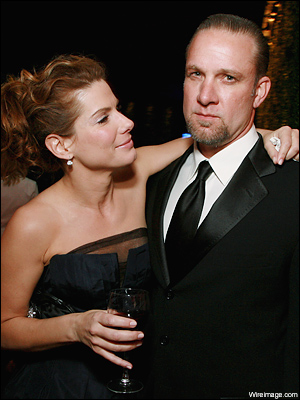
Anyone else feeling sorry for Sandra Bullock these past few weeks? I am. She strikes me as the rare Hollywood star who is well liked for a reason, which is, um, probably why she's so well liked. As a fan of Celebrity Apprentice, her soon to be cheating ex-husband Jesse James struck me last year as a kind, cool cat, which tells you all you need to know about reality shows. The more we read about his various affairs, the more we realize that despite spending nearly two months watching James, (he finished 3rd on the elimination show) we didn't know him at all. We're sorry, Sandra. You deserve better.

Sex Addicts. Tiger Woods. You were expecting a comment. Enough said.

Speaking of Celebrity Apprentice, which along with American Idol is one of my two intellectually challenged candy shows that I enjoy each week, I got a close up view of Cyndi Lauper and I have to say… she is perhaps one the dumbest human beings – and yes, she's a celebrity, which tells you something about celebrity – I've ever seen. ("But Misder Trump, if Ah bring 'dose udders in here, 'day could get fy- yerd") She's also unbelievably sweet and likable and creative. Still, it helps keep things in perspective when you look at your own life. We're not necessarily rewarded based on brains or even talent. Mostly it's about where you end up on the roulette table. And for those with less talent but the willingness to say, throw everyone else under the bus to 'get for themselves', the world needs far more Cyndi Laupers and fewer Annie Dukes (the poker player who finished second in last year's Apprentice) who made a point of throwing nearly everyone else under the bus, and smiling while she did so.

5. Leafs, Raptors and Don Cherry

I can accept that my teams are terrible. I can accept that they may always be terrible. But these past two weeks I've found myself watching the Leafs, in last place in the Eastern Conference, ahead of the Raptors, fighting for a playoff spot, although I'm a much bigger basketball fan. Why? The Leafs play hard. Shift after shift. The Raptors have talent, but too many individuals playing soft or not playing hard or, as Andrea Bargnani said in a recent interview on NBA.com, sometimes "I'm just lazy. I should be getting more rebounds." The whole Turkoglu mess (sick one night for the game, out partying at the clubs the next) has been the capper of dung piled onto the heap this year. If we were to ask Don Cherry what was wrong with the Raptors, he'd probably snort and whack Ron Maclean with one of those hard elbow pads. "What's the matter with you, dummy. They have too many Europeans." To that, I can only say that the Raptors have too many of the wrong kind of Europeans, and too many of the wrong kind of North Americans.
-Steve
Authour's note: I realize that this is being published on a Tuesday, but it was written on Sunday night/Monday morning, hence the title. And yes, I'll have more thought-provoking (read:angst ridden and wondering if everyone feels the same way I do) blogs to come. I just need to get past the next 20,000 words or so on my novel.


Thursday, March 04, 2010

Moving Towards Contentment

    I see them everywhere. Here she is on the sidewalk, old and bent over, makeup garishly applied, smiling at the people passing by with glazed eyes, bobbing to a non-existent rhythm without music. There he is, in his mid-forties and heavy-set, wearing a suit and overcoat, shuffling back to work, his shoulders bearing a loaded burden, his gaze distracted and sad. There she is, early twenties, plugged into her Ipod, muted anger seething from the early crow's feet around her eyes and the tight lips barely holding back a snarl.

    Sometimes they're loud with their complaints, but mostly it's the silence that spells the truth, the concealed frustration of a life that has stopped moving. A life that once made sense or perhaps never did, but now reflects its own futility in the lifeless trudging on an endless treadmill. We're all hamsters, they seem to say, running on a wheel to nowhere.

    Most of us go through seasons in life where we're stuck on that treadmill, whether it's the kids or the family or the career, we wake up one day and everything is exactly the same as it was yesterday. And while this is not unusual, it does not make it any less frustrating. The question then, is what to do. How do we break these chains of melancholy that, if we're not careful, can become permanent? Remember, we're not talking about happiness, but contentment, which are related but substantively different. Studies have shown that a year after people win the lottery or suffer a spinal cord injury are at about the same 'happiness' levels they were beforehand. In many ways, happiness is as much about our personality as it is our circumstances. Contentment however, is something that we can control a bit more, provided we understand a few of the basics necessary for it to happen.

For example, psychologists talk often about the dynamic nature of humanity; that the Self is constantly changing and responding to new stimuli and new experiences. It's our ability to adapt to these changes that determines how content we'll be with our life. Much of our contentment will revolve around our ability to match our adaptions with our own expectations.

Two Questions


There are two questions however, that often get in the way. The first is "why me." It is a statement that speaks to a lack of say in our own life. I may take a job working at Starbucks because I have to pay the bills, but I'll hate it. However, if I can find a job working with kids that not only pays more but provides me with a sense of satisfaction because I love kids, then my adaption to the changes in my life is both smart and controlled. If we only resent the changes, and don't adapt to them consciously by taking control of them, we'll end up with a repressed and angry life.

The second question is more philosophical and yet just as difficult. Instead of "why me", the question is simply "why". Why bother, it's all going to end. It's all the same. No one really cares. Understand that the philosophical pondering behind 'why' is new. The ancient Greeks, for example, would have said, "so what, play your flute!" And it's only possible because we have answered the daily questions of survival that the question exists. But whether the questions is "why" or "why me", the effect is the same: a distancing from understanding who we are and what we need. And as that distance grows, so does our discontent.

The Answer Is…


Not surprisingly, the healthy approach is to understand these changes and to learn how to "dance" with our Self, move in rhythm to the changes in our life and the inevitable changes that occur as we learn more about who we are and the things we need to address. The danger is that in learning who we are, we must face the truths of our weaknesses and our humanity, which often leads to either denial or self-delusion, which in turn stops us from 'dancing', which leads us back to the two questions, which lead back to bitterness and frustration and the treadmill. As is often the case, the culprit is egotism.

    That said, there's no single answer to these questions, no perfect system of religion or psychology that will heal our wounds and provide the answers we are looking for. I know a lot of my friends in the church would disagree with this and they would tell me that Jesus is capable of meeting all of our needs, and that we just need to 'stick to it' or 'be faithful' and we'll be happy. Unfortunately, it's this kind of narrow minded, systematic approach that has caused so much pain over the years. Jesus may be the answer, and God may love us, but that doesn't provide all the answers. If anything, it only begs more questions.

    However, one thing we have learned is that contentment requires a reason for life. We need a reason for our existence. We need a reason to wake up in the morning. And not only do we need a reason, inevitably, we need a focus that is outside of ourselves. As someone who has struggled through depression and despair, I can tell you that it is inevitably egocentric. Depression, ultimately, is all about me. About how I feel. Living in a consumer society doesn't help that either, not when we're bombarded with messages that tell us if we get this or that, we'll be happy. Studies have shown that both psychologically and neurologically, this is complete crap. The act of giving not only touches the pleasure centers in our brain, but the residual impact is far greater than something like 'retail therapy.' The church, when it's done right, provides a wonderful outlet and excellent structure for this basic but often overlooked requirement for contentment. Especially the structure of giving that encompasses most of what a good church does. (Studies have shown that people who are involved in a church are inevitably happier than those who are not. For all the crap that comes out of some churches, like any human institution, there's no better way to ensure that your life is not all about you.)

    Some Practical Tips


    The one thing we can control is our sense of direction. In a society concerned only with survival, that structure is already provided. But for us, that structure is often centered on what we want. I want a house. I want a nice wardrobe. There's nothing wrong with that, necessarily, but a structure built on material things is destined to provide empty rewards. What we need then, is a plan for the next five years that is centered on our passions. Where do you want to be in five years? What do you see yourself doing? What is the thing you love most in life, and how can your life be built around that? It doesn't matter if you're twenty-one or seventy-one, we all need a plan. Now it isn't the Ten Commandments, it doesn't have to be shaped in stone, but we need something to point us in the right direction.

    Two weeks ago, I was feeling a bit adrift, perhaps in keeping with the February blues, and so I set myself out a list of five big goals, and ten lesser goals for the next five years. The result? A sense when I get up in the morning that I'm headed somewhere. It doesn't mean that we suddenly have all the answers or that we don't struggle with the tragedies of the human experience, but there's a deeper sense of control. When we point ourselves towards others, a paradox reveals itself in that is becomes easier for us to look at some of the junk on the inside.

    This Year


    The weather's been odd here in Toronto this past winter, and today the sun is shining, the traces of snow all but gone from the streets. Spring is on the way. What about you? Is this going to be a time of refreshing, or does life seem much as it did last year? My challenge for you is to pull out a sheet of paper and allow yourself to dream. What is it that you love most about life? Who is it that you'd most like to help? Write it down. Write about your passion and make sure you have at least one goal that includes making a difference in the people around you.

In many ways, we live in a world of zombies, don't we, and sometimes those zombies are us. We get lost in an endless cycle of watching TV, going to work, reading the same books and doing our chores and jobs with no life and no forward momentum. We forget that we're dynamic, that we're built to change and for change, that we still have a choice about what our lives will be. My prayer this week is that you'll start the new season with a sense of purpose, that in understanding your passions you'll face down the fears that would hold you in their spell, and that you'll realize the life God intended for you.

-Steve


Sunday, February 21, 2010

Hey Parents; a good book for little girls


The term hero is a masculine term. We use the word 'heroine' for girls, which implies something altogether different, as Kathleen Ragan explains in the introduction to her wonderful collection of stories and fables from around the world called Fearless Girls, Wise Women, & Beloved Sisters. I know many parents express frustration over finding stories with strong female protagonists. For every tale like Cinderella there are a hundred like Sleeping Beauty, where the female is passive and submissive. Often times they are portrayed in a far worse manner, as being lazy or negligent. As much as I love Dr. Seuss, for example, and those beautiful rhymes, take a good look at his female characters. Yup. Not so great.


I've worked with kids and youth most of my life, and it's easy for me to forget that as a boy, most stories appeal to me, in large part because of the strong male characters. Well, we want our little girls to know that they can be strong too, right? One of the things I've always liked about the stories in the Bible are some of the wonderfully strong female characters (Like Deborah or Ruth or Esther or Mary or Mary Magdalene) But there are some great stories in other traditions as well, stories that will help our girls to grow up and not accept the misogyny and patriarchy inherent in so much of our culture. It would also be beneficial for young boys to hear these tales as well, so they too, can hear stories of strong women. Nothing can supercede the example set by parents, of course, but for those of you looking for some positive female role models for your kids, this might be a good add to your collection.

-Steve
PS There is some criticism of Ragan's collection and her comments following each story that women are always 'perfect' in these stories. I think this would be a valid criticism except the book is an attempt to counter and then balance the scales against so many children's books where the woman is not merely flawed, but treated as less than the man.